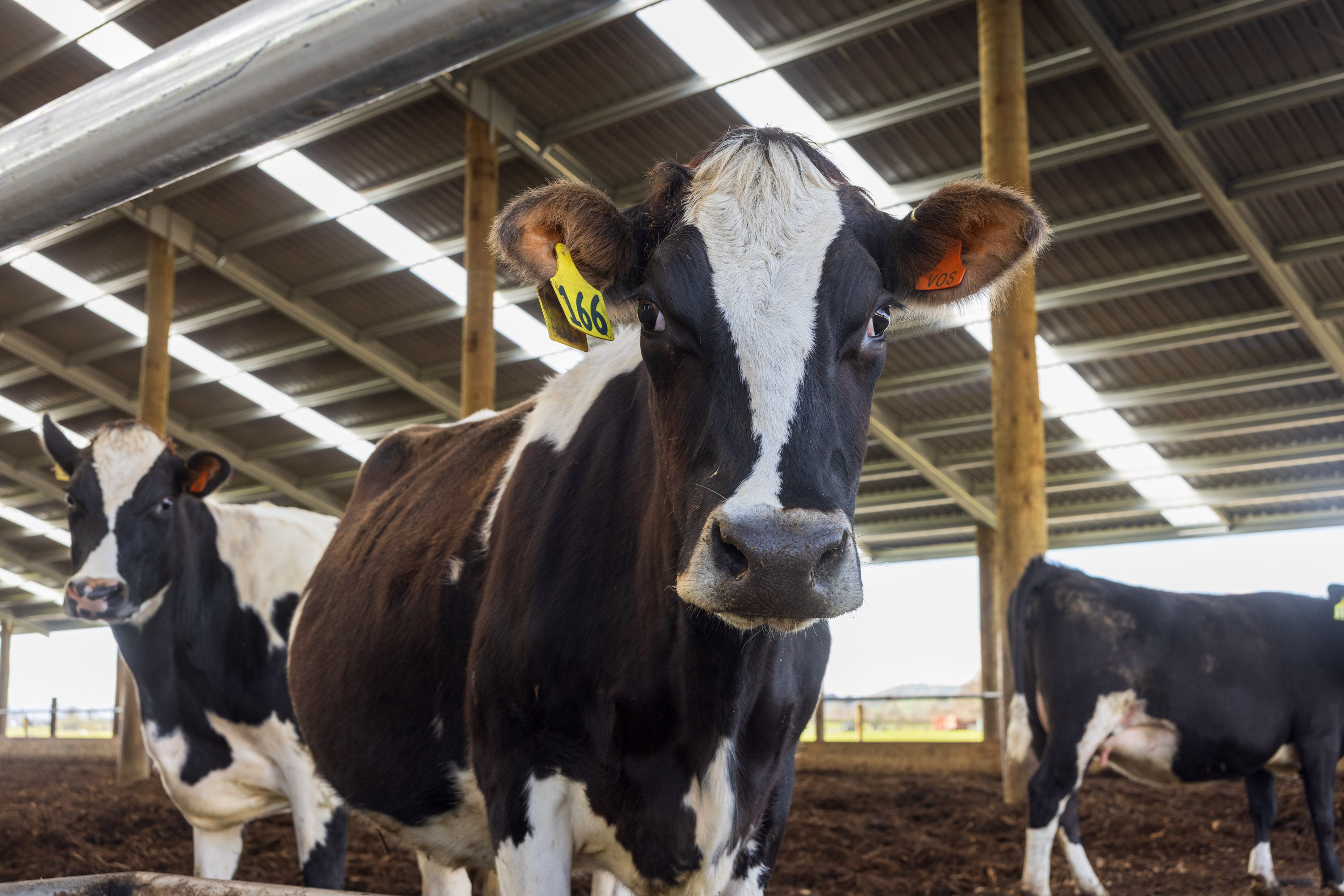
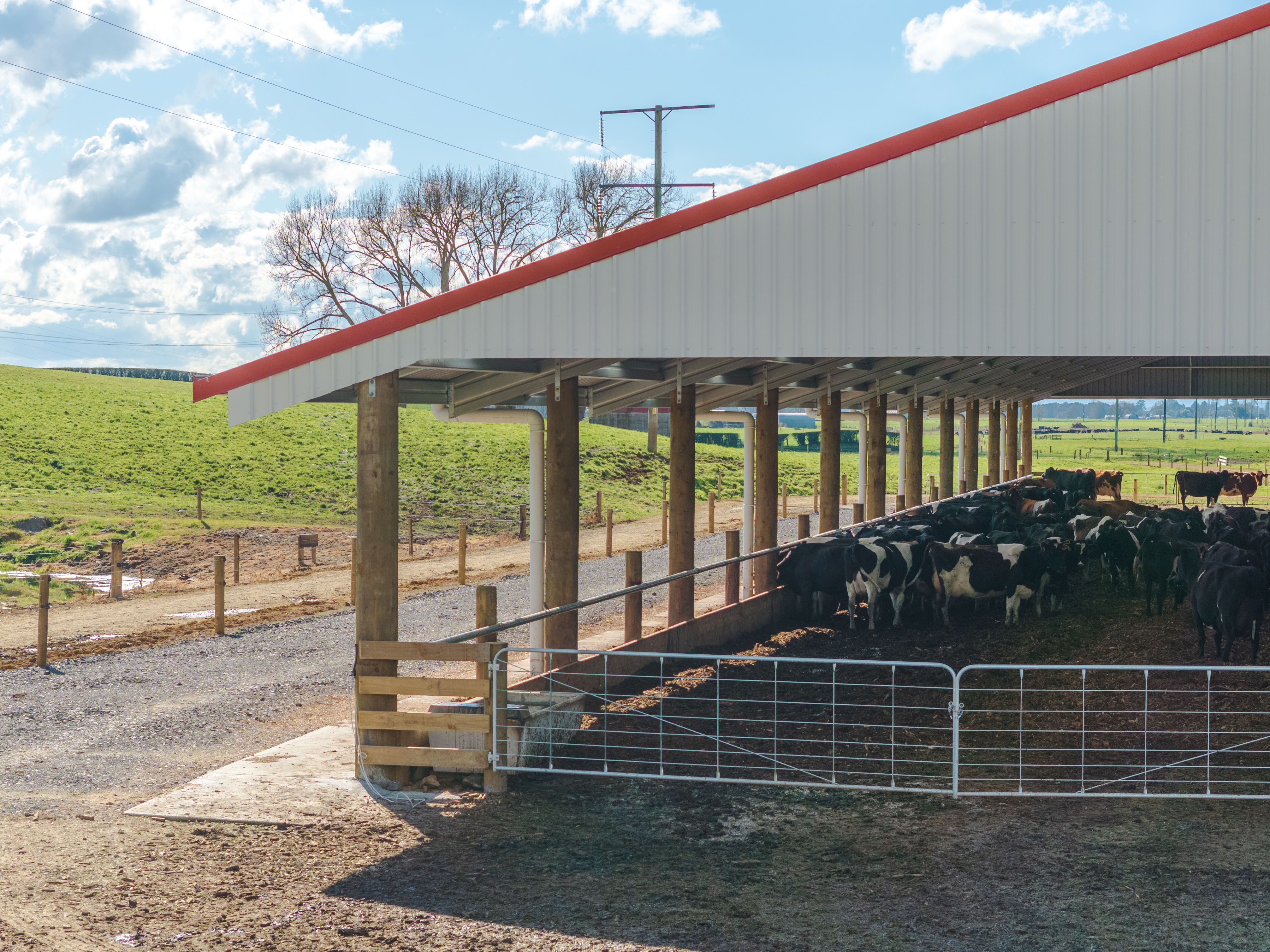
Vos Farms Composting Barn, Huntly
Location: Huntly Waikato
BUILDING DETAILS
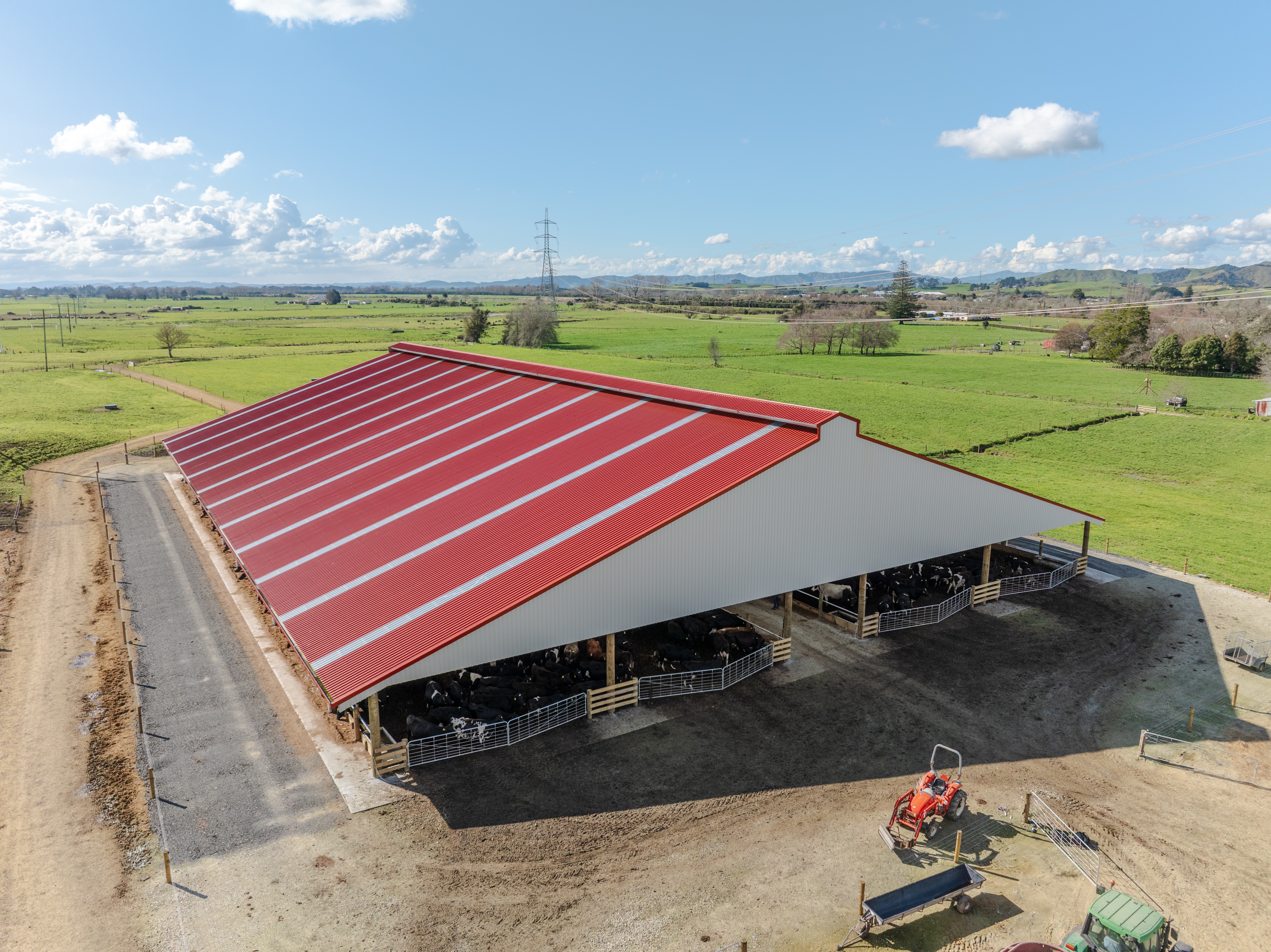
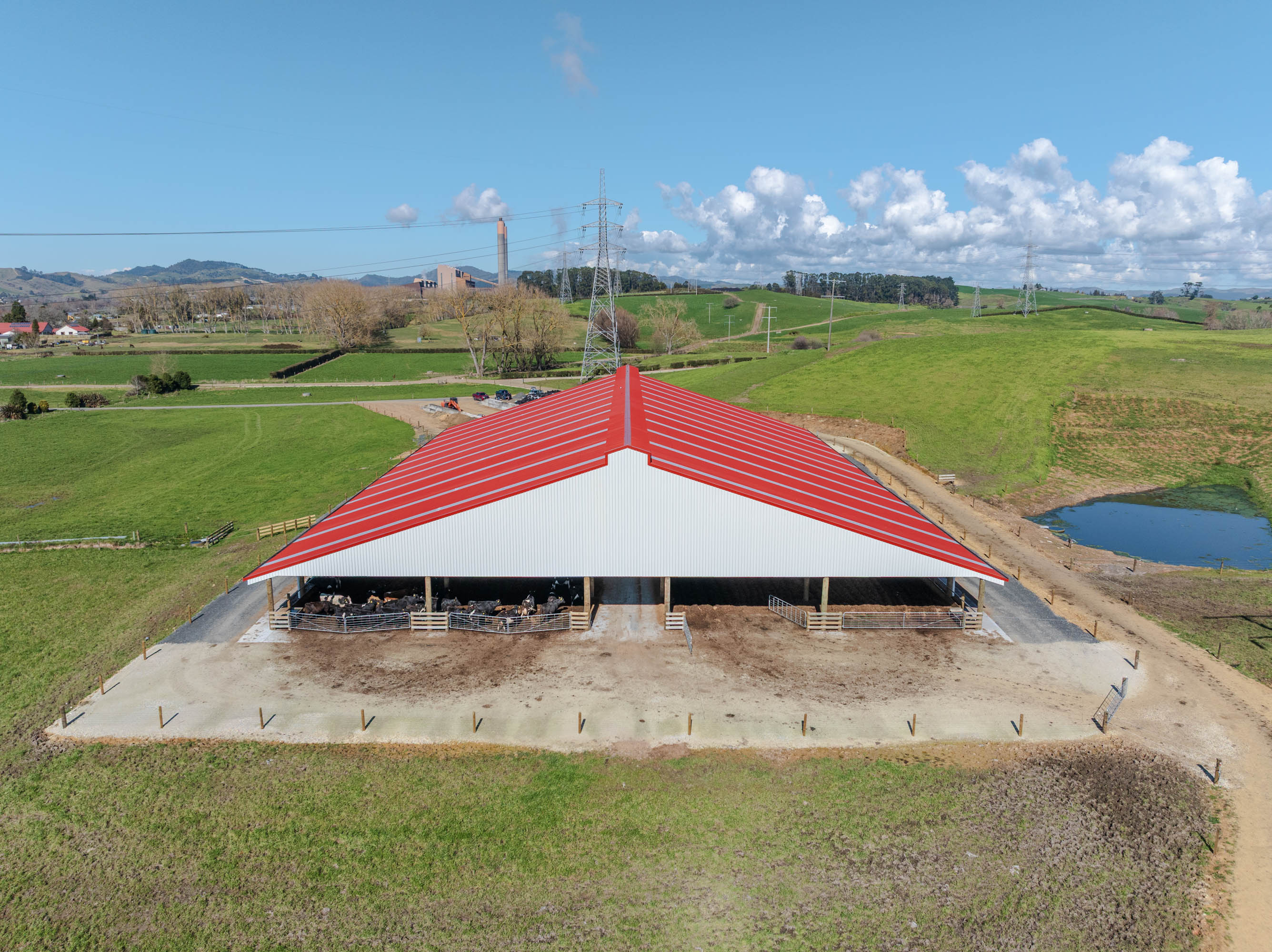
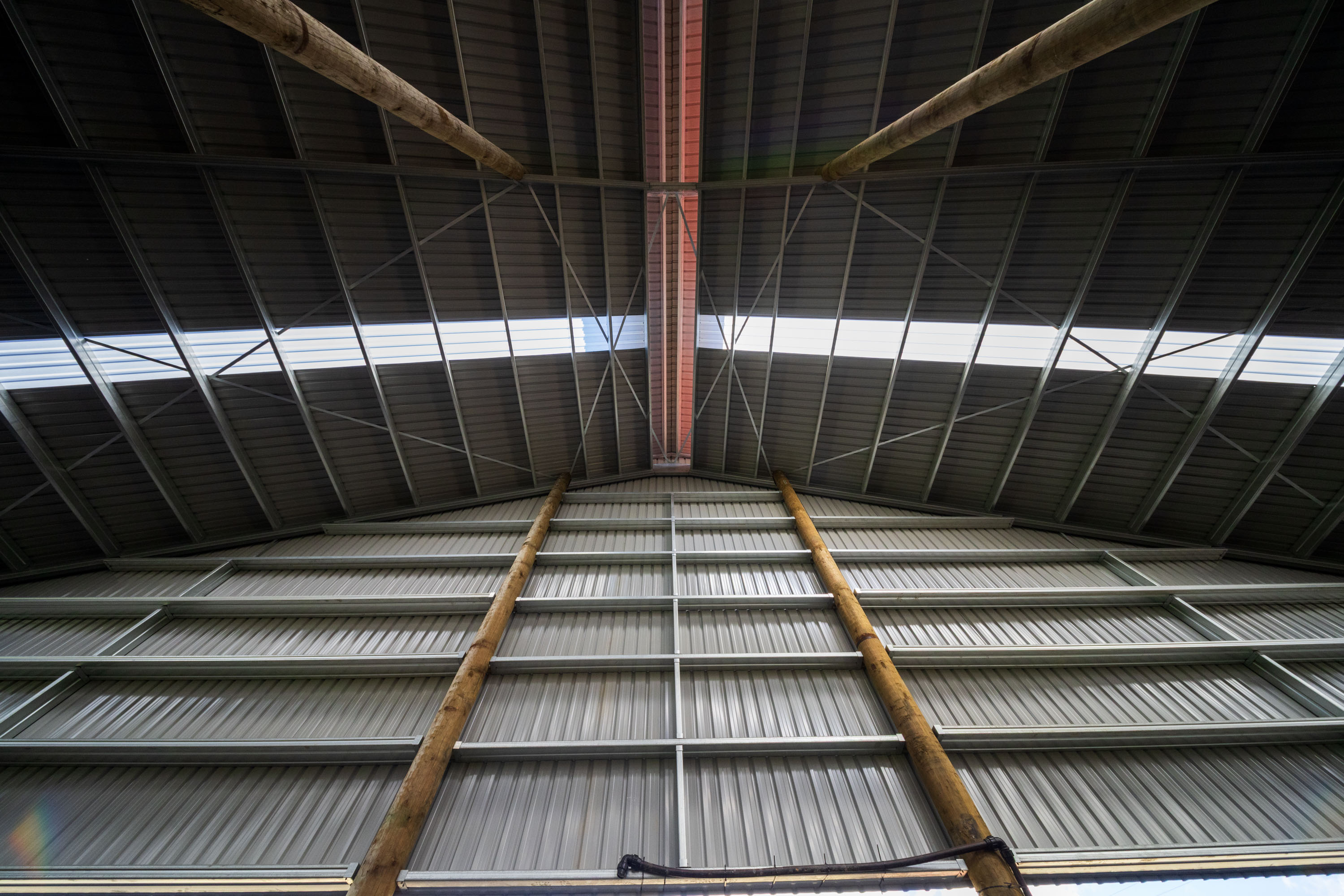
Size: 45.5m Wide, 66m Long
Style: Gable
System: Futura Box Beam System
Herd Size: 320 Milking Cows alongside young and beef stock
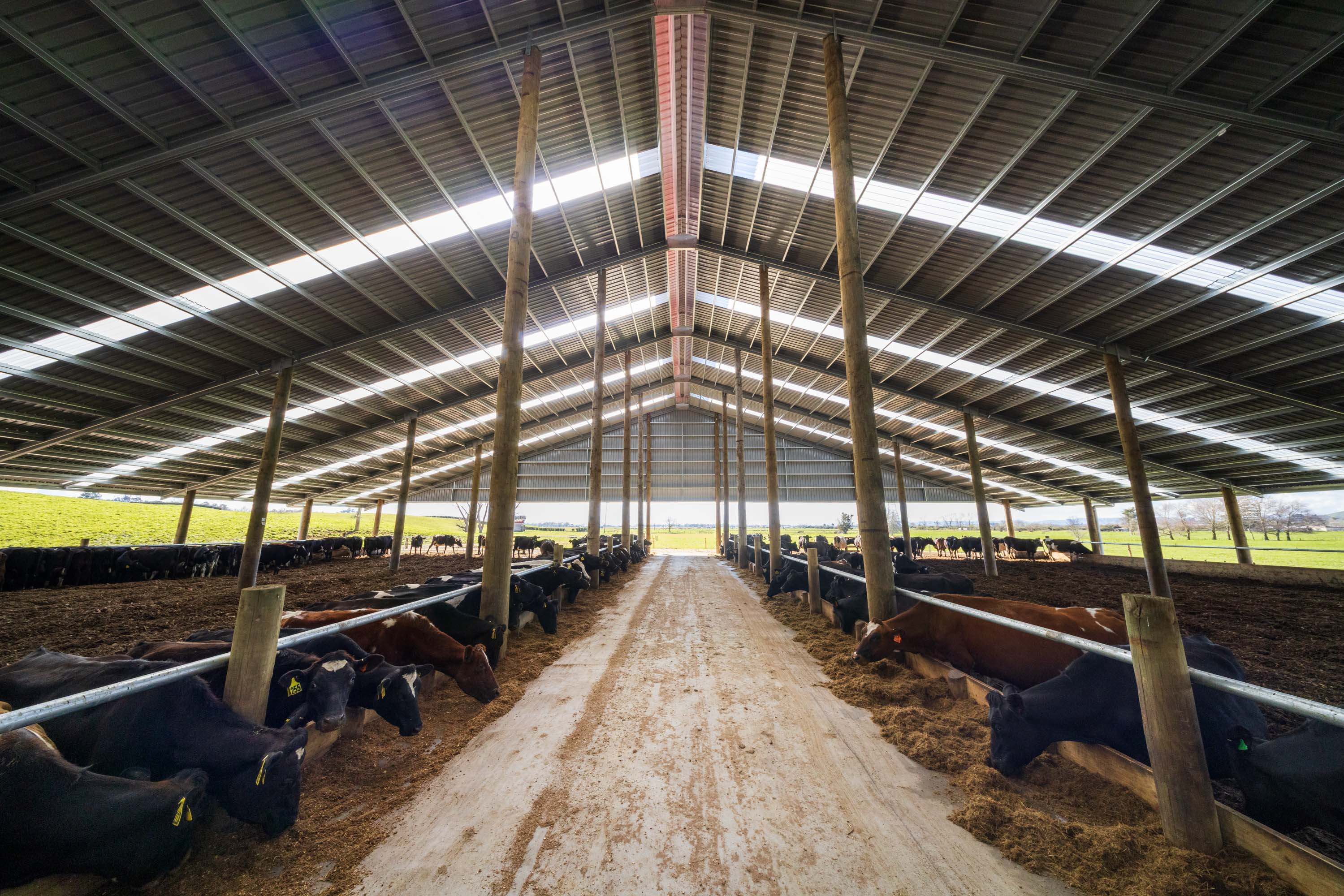
Primary uses: Covered feeding, cow resting, wet-weather housing, pasture protection and calving
Vos Farms One Year On: 45,000kgMS More Production
Getting more from the farm they already had
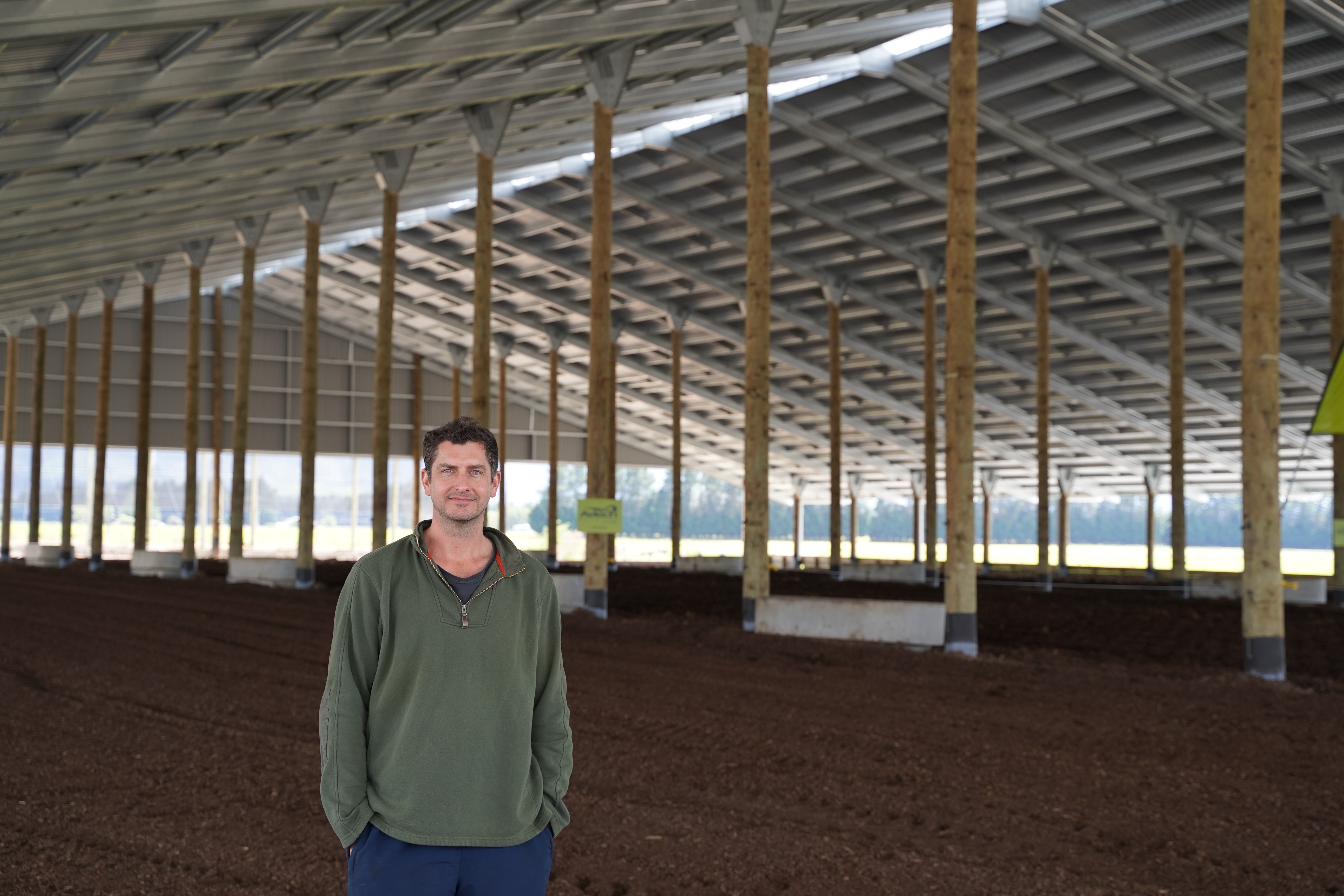
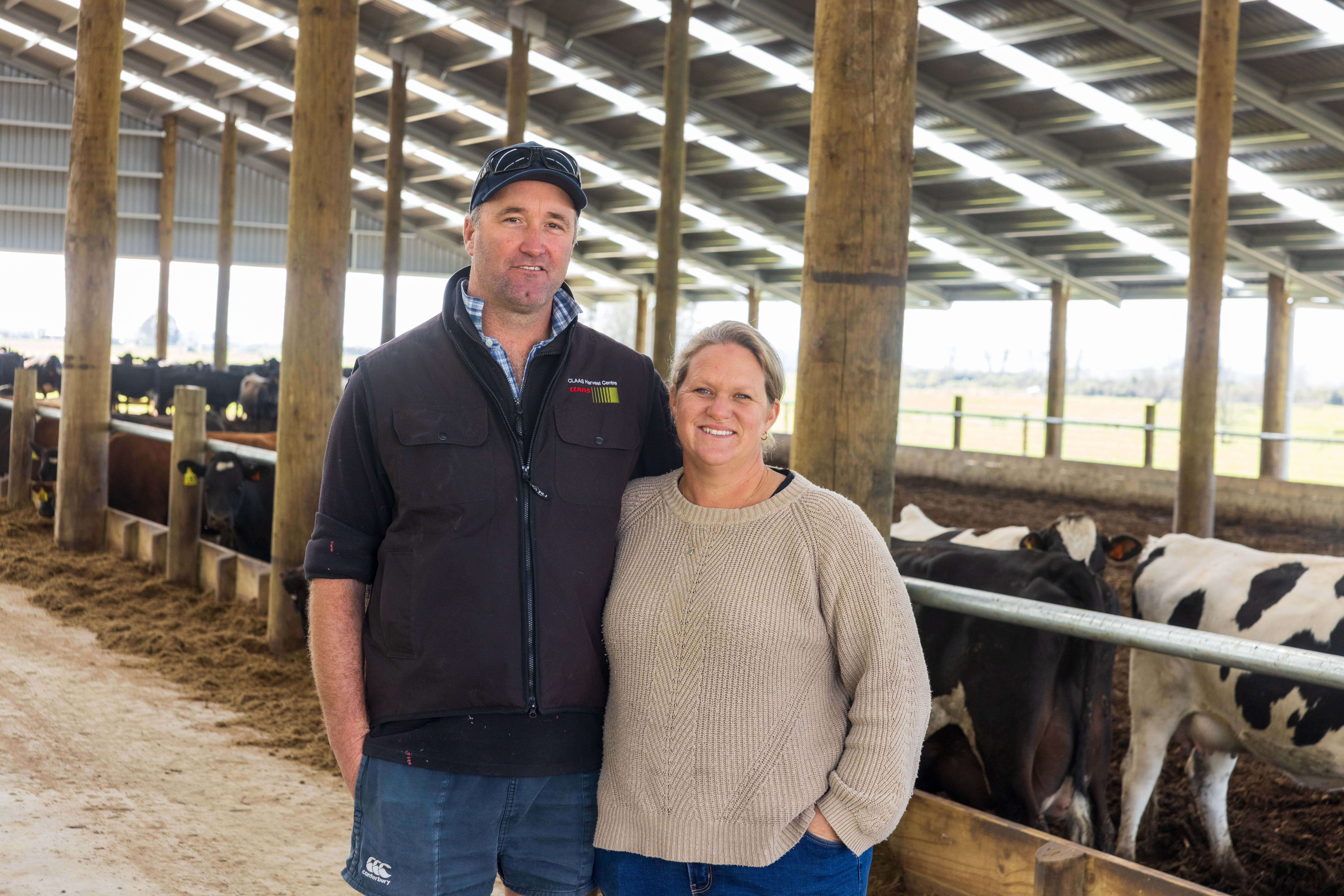
For Rene and Ereine Vos, investing in a composting barn was never about making the farming system bigger or more complicated.
It was about getting more from the land, cows and team they already had.
Vos Farms is a family-run dairy operation near Huntly in the North Waikato, milking approximately 320 cows. After years of dealing with wet clay soils, pasture damage and the pressure of managing cows through difficult conditions, the family invested in a purpose-built Aztech composting barn.
After its first full season as part of the farm system, the results exceeded their expectations.
Vos Farms had targeted an additional 20,000kgMS.
They achieved an additional 45,000kgMS.
“The return has been a lot more than we expected, and I think there’s still more production to be gained out of the system.”
Project results at a glance
+20,000kgMS
Original production target
+45,000kgMS
Actual production increase
320 cows
Milking herd
The challenge: wet weather was costing pasture and production
The North Waikato’s clay soils meant periods of wet weather could quickly become damaging.
Cows moving through vulnerable paddocks caused pugging and pasture loss before the season had properly begun. Feed utilisation became more difficult, calving was harder to manage and daily decisions were shaped by where cows could be placed without creating further damage.
For Rene, the impact was both commercial and personal.
“You’re basically pugging the farm and destroying the pastures before you even start your season. Every farmer’s worst nightmare. You know you’re losing production.”
The family wanted to lift production, but purchasing more land would have meant taking on greater debt, more complexity and another property to manage.
Instead, they chose to improve the productive capacity of their existing farm.
One year on: the result exceeded expectations
The barn has now been operating for approximately a year and a half and is being used through its second calving season.
Production has increased beyond the target Vos Farms originally set, with the farm recording approximately 45,000kgMS more production during its first full season with the new system.
The gain reflects the wider changes the team has implemented around the barn, including improved feed delivery, better pasture protection, greater control over cow management and fewer weather-related disruptions.
The barn provided the infrastructure needed to bring those changes together.
“After a year, we’re very happy with what we’ve come up with. It’s exceeded what we wanted to do.”
Greater control across the whole farming system
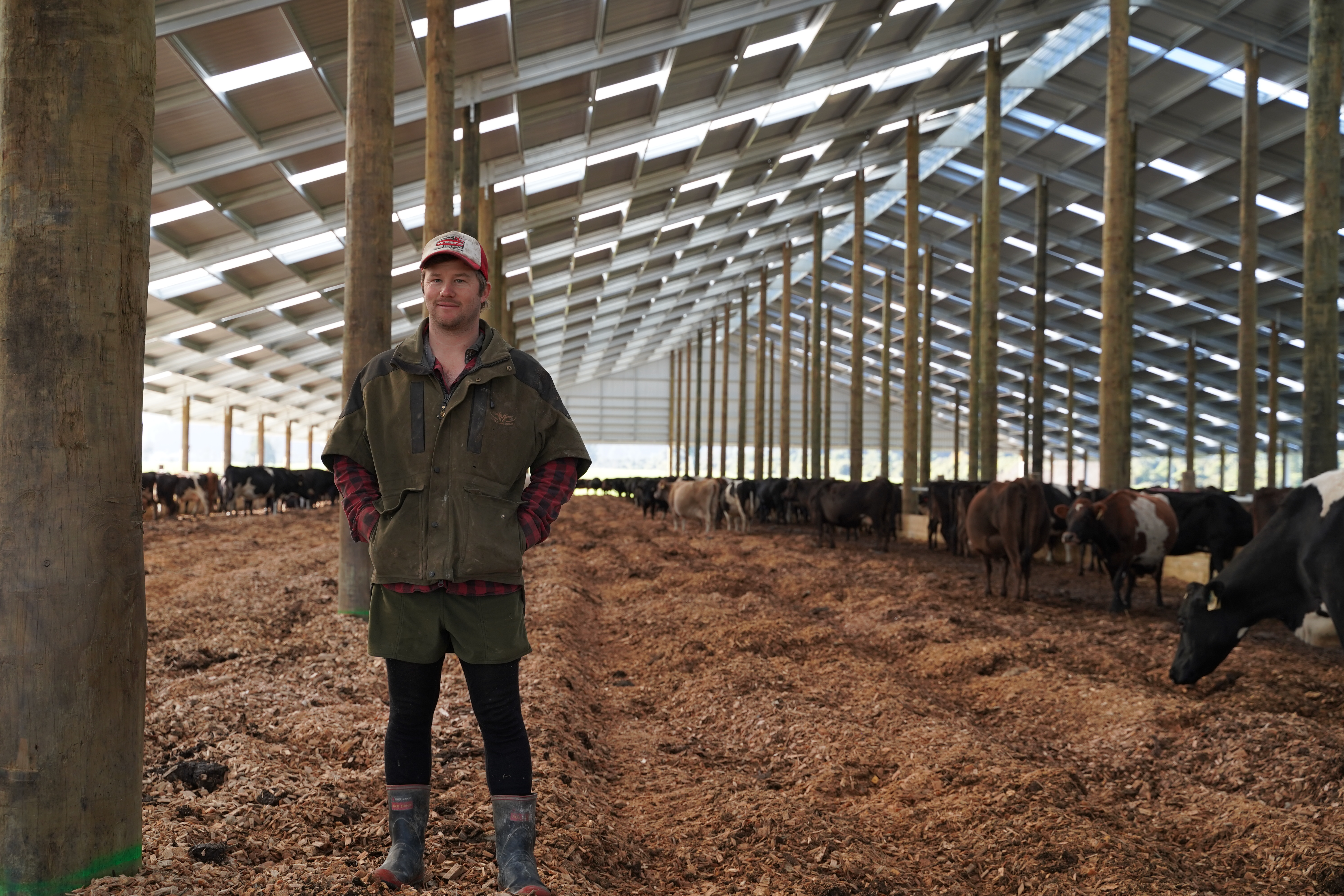
The barn is now central to the way Vos Farms operates.
Cows can be brought under cover when pasture conditions are vulnerable, fed in a more controlled environment and returned to paddocks once conditions improve.
This has helped the farm team:
- Protect pasture from pugging and treading damage
- Reduce feed wastage during wet conditions
- Manage cow condition more consistently
- Monitor springers and calving cows under cover
- Make grazing decisions based on pasture conditions
- Reduce weather-related disruption
- Produce more from the existing farm platform
“Our farm is all focused around the barn now. The barn has changed the whole system of the farm.”
Less pressure when the weather turns
For Rene, one of the most valuable changes is knowing the cows, feed and pasture are protected when difficult weather arrives.
Instead of starting the day concerned about damaged paddocks or where cows can safely be placed, the team has an established system available under cover.
“Your mind is not worried anymore. You know things are undercover. You know there aren’t going to be problems in the morning, and you know the cows are happy and they’re fed.”
The benefit is not limited to production.
The barn has made difficult periods more predictable, reduced pressure on the people operating the farm and helped create the tidy, controlled farming system Rene wanted.
“I enjoy getting the most out of what we have rather than trying to have more. I enjoy seeing things going well, staff being happy and not being too stressed over all the little things.”
A barn still needs to be managed
Rene is clear that constructing a composting barn does not remove the need for good management.
The team continues to actively manage the bedding, feed, pasture, cow condition and changing weather conditions. How the barn is used remains an important part of the wider farm strategy.
“You can’t expect to just build a barn and not manage it. You’ve got to manage your bark, your pasture, your feed going in and the weather. It still all comes down to management, and the barn has a big part to play in that.”
This approach has allowed Vos Farms to continue refining the system and identify further opportunities for production and efficiency gains.
Build more control into your farming system
A composting barn should be designed around how your farm operates, including your herd, land, feeding system, pasture conditions and long-term business goals.
Talk to the Aztech dairy team about what a purpose-built composting barn could make possible on your farm.
Read Farmers Weekly Article
Location: Huntly, Waikato
Client: Dairy Farmer
Application: Dairy Farming Waikato,
Reference: C3155



.svg)
.svg)


.jpg?hsLang=en)
.jpg?hsLang=en)