500-Cow Composting Barn, Invercargill | Carl North
BUILDING DETAILS
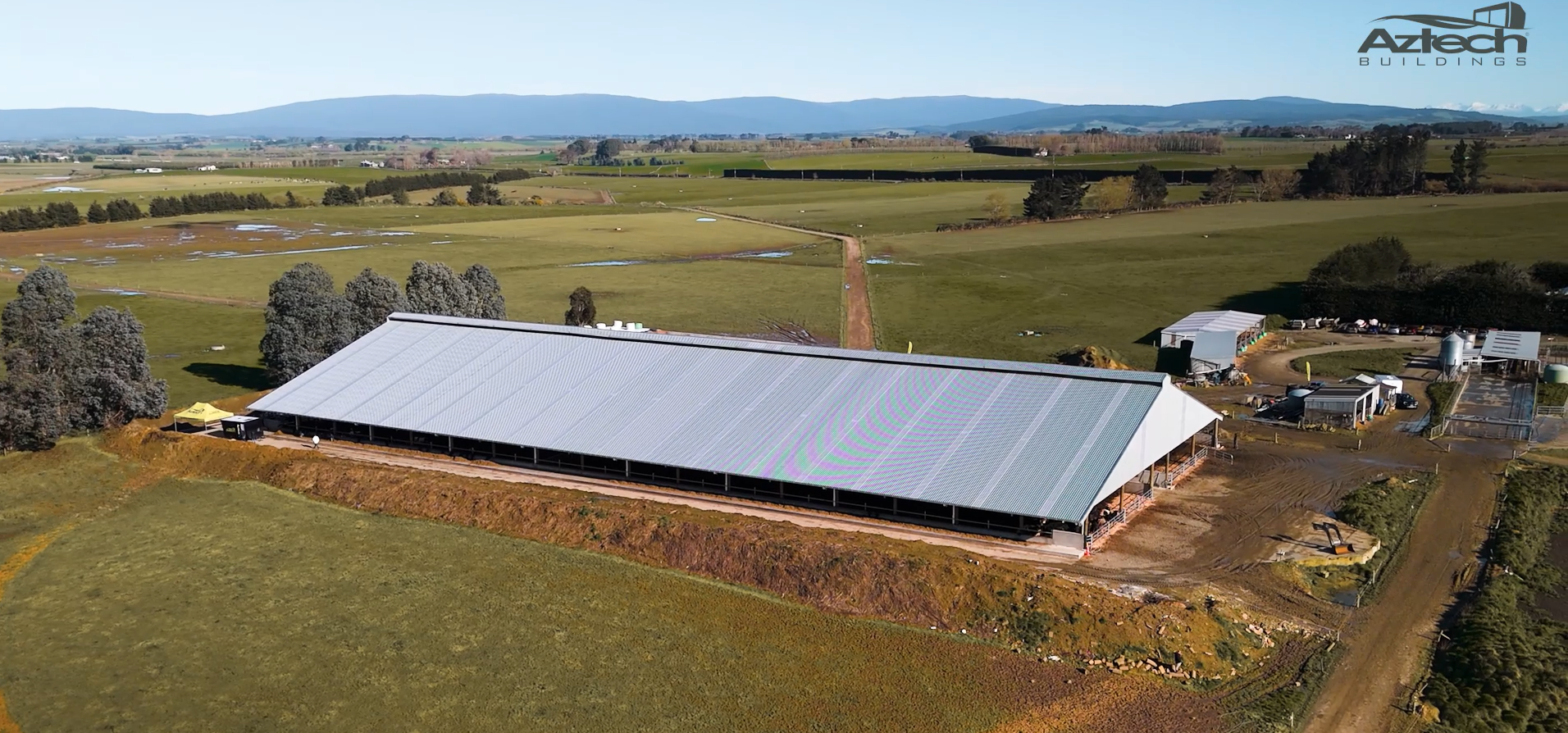
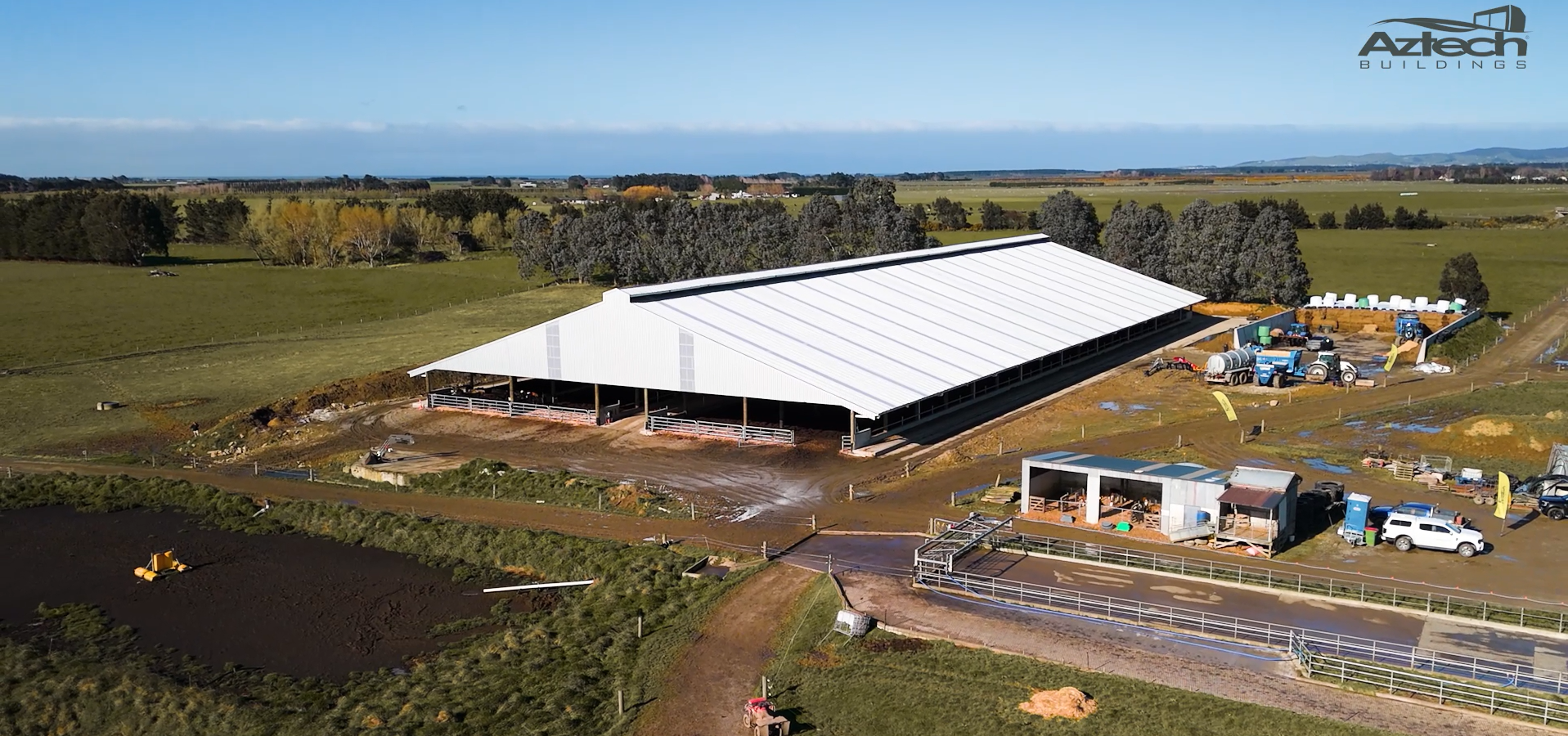
Size: 106m Long x 45.5m Wide
Style: Gable
Herd Size: 500 Cows
System: Futura Box-Beam Rafters on Timber Pole Columns
Overview
A purpose-built Southland dairy barn designed for cow comfort, pasture protection and greater control through wet conditions.
A composting barn built for Southland conditions
For Carl and Rachel North, the decision to build a composting barn wasn't simply about putting cows under cover.
After farming the Invercargill property for around 25 years, they were looking for a better way to manage a naturally wet farm, reduce pressure on pasture, simplify calving and stock movement, and create an environment that allowed more of their herd's potential to come through.
Their previous farming system relied heavily on an off-farm runoff for wintering and calving. During spring, freshly calved cows needed to be transported back to the home farm, adding significant time and workload during one of the busiest periods of the season.
Wet conditions also created another challenge. When soils became saturated, pasture damage could be significant, with one previous wet spring resulting in around $60,000 being spent regrassing approximately one-third of the farm.
The completed Aztech composting barn gives the Norths another option.
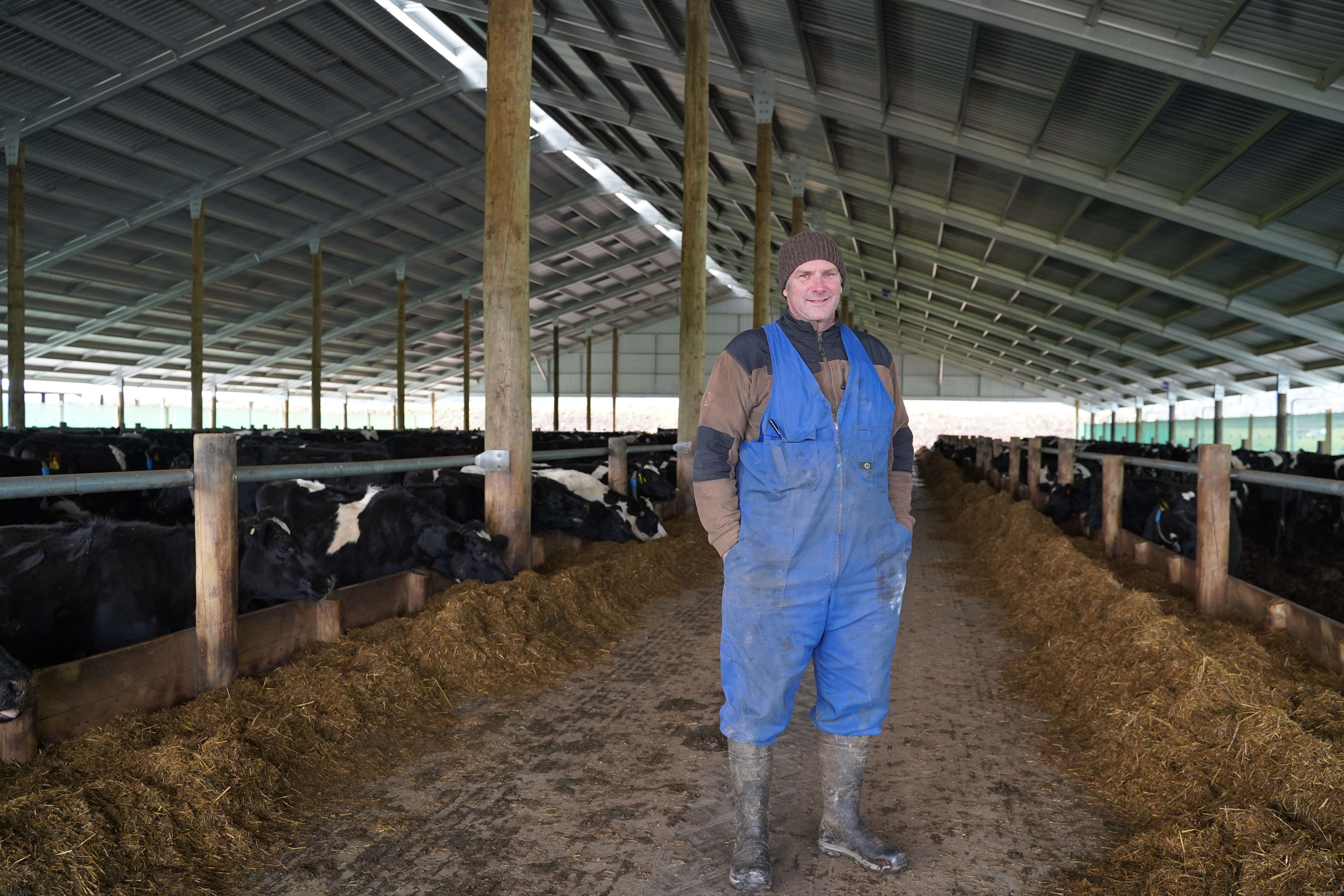
Rather than leaving cows on vulnerable pasture, the herd can be brought into a purpose-built environment where feeding, cow comfort, calving and bedding management can be controlled more closely.
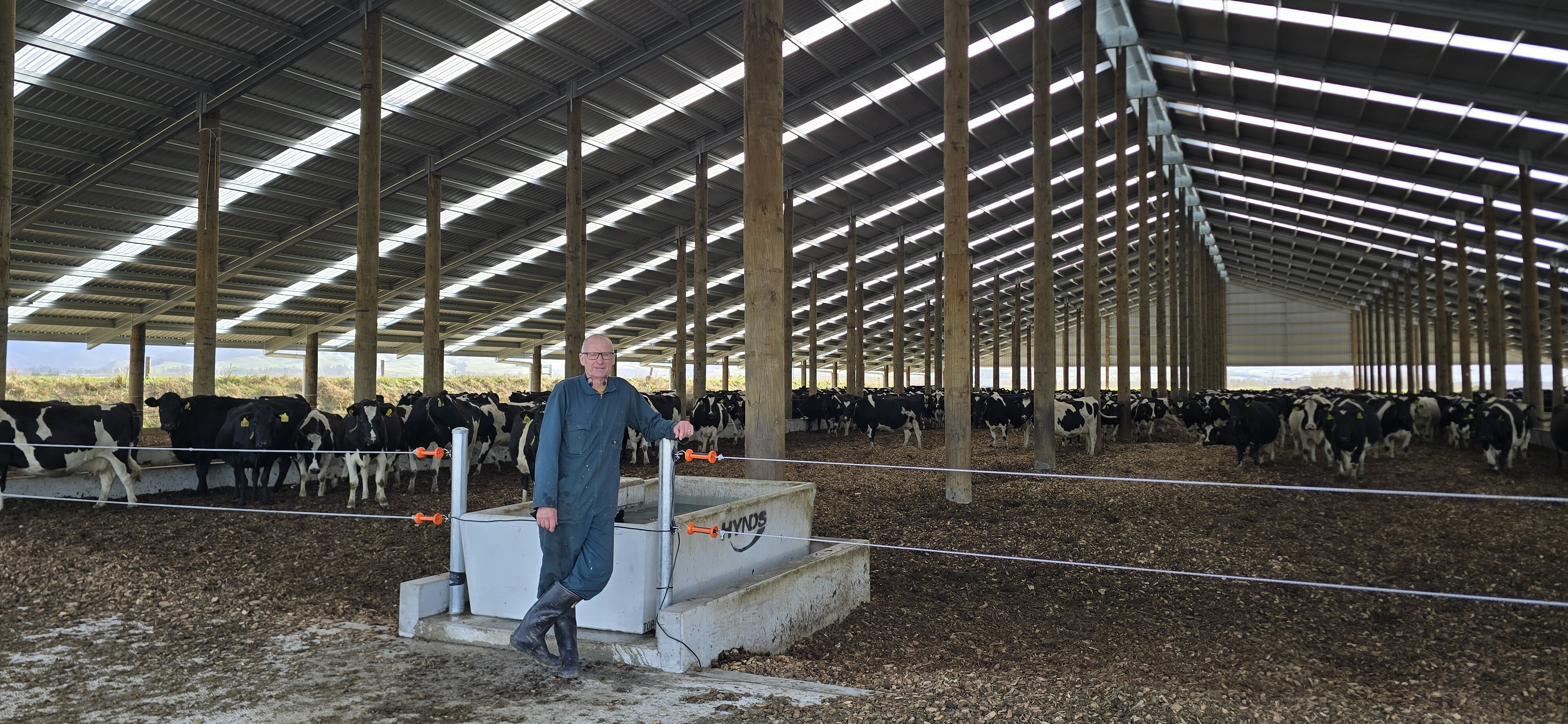
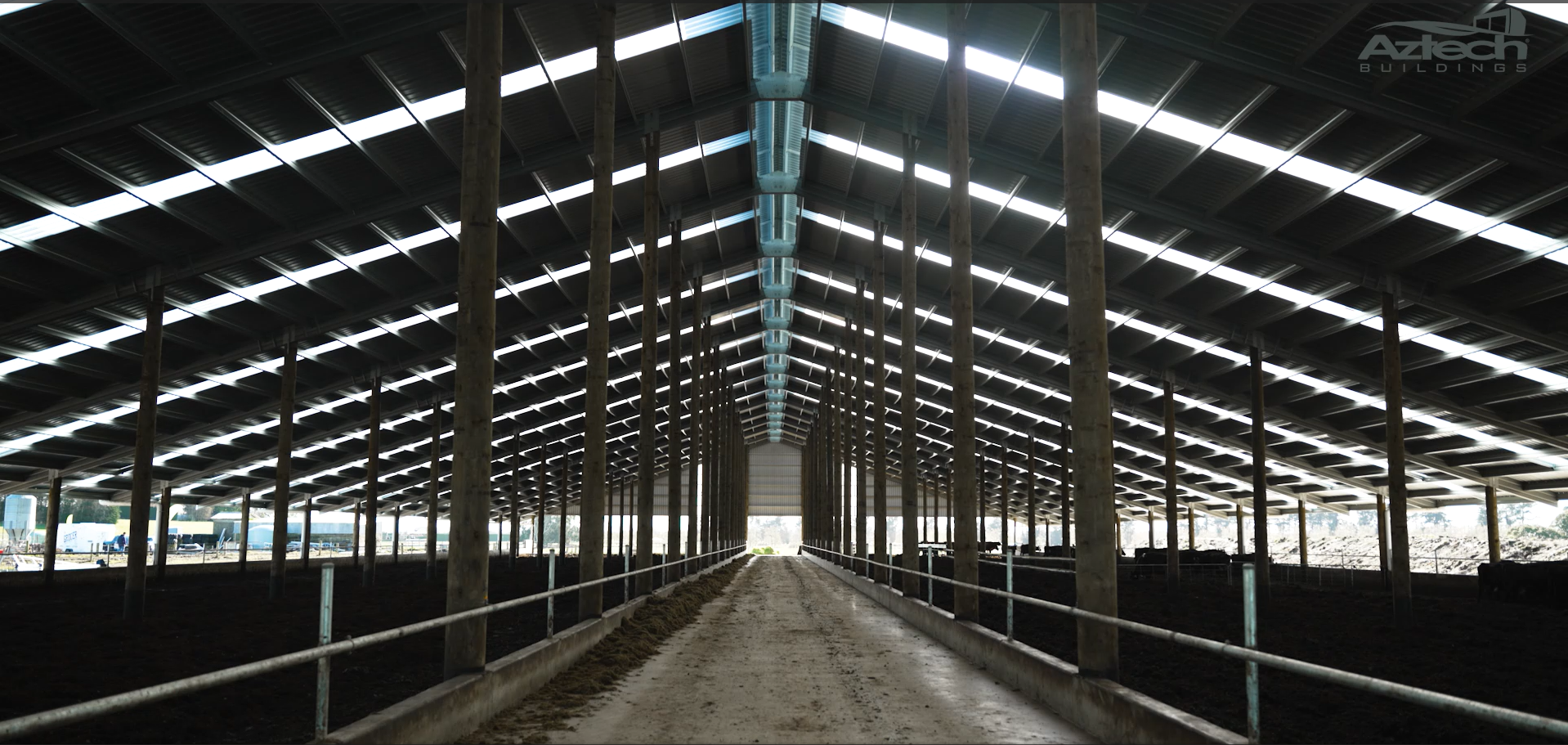
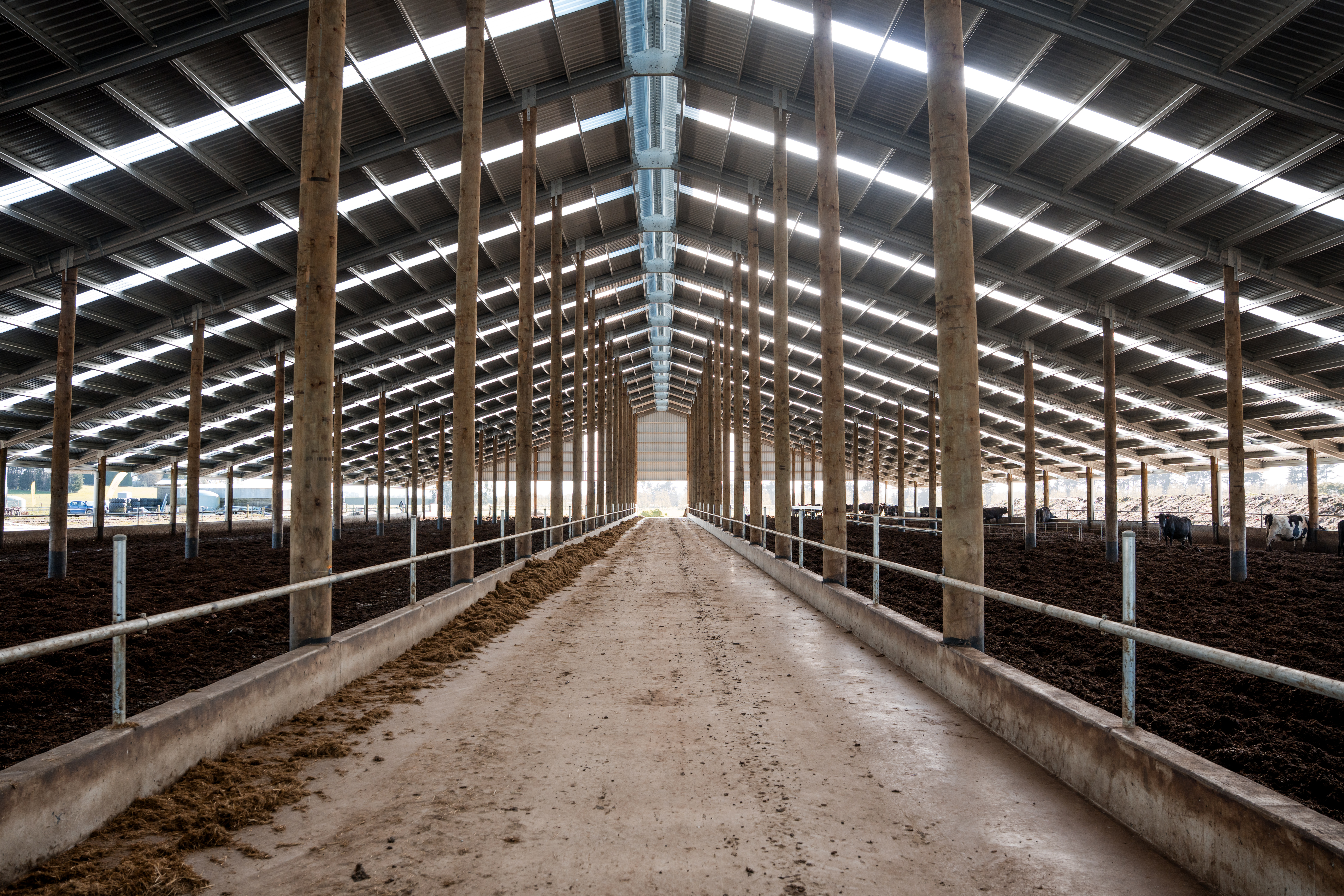
The 106 metre by 45.5 metre barn has been designed around the composting system itself, with approximately eight square metres of bedding area per cow, deep woodchip bedding, an 18-degree roof pitch and continuous ridge ventilation to help move moisture out of the building.
For Carl and Rachel, the project is about creating a more resilient farming system, not simply building a shed.
Why Build a Composting Barn?
Protecting pasture
Southland's wet conditions made pasture damage a major consideration. Moving cows off paddock when conditions deteriorate gives the farm another tool for protecting pasture and maintaining the rotation.
Cow comfort
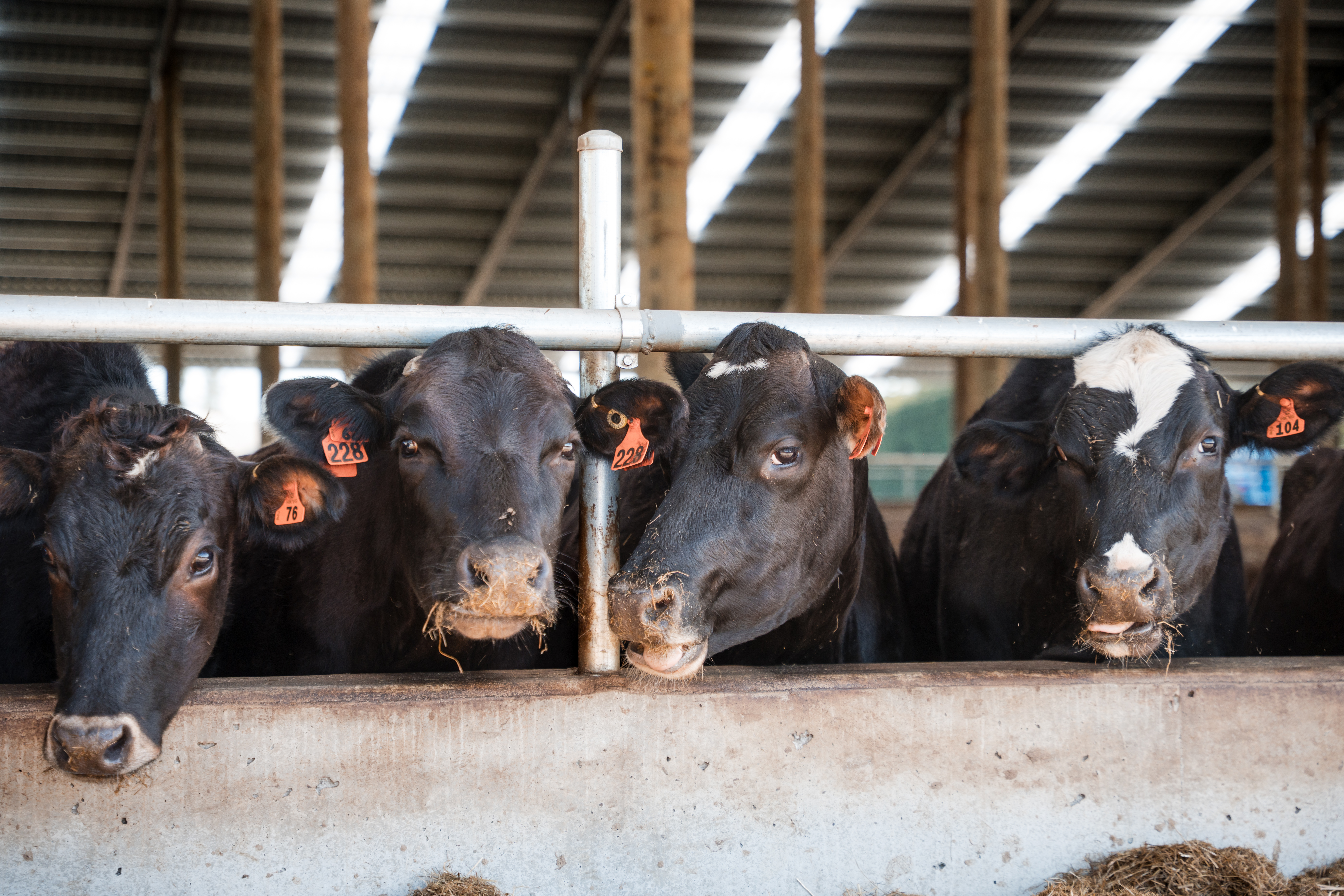
Carl preferred a deep-bedded compost system over harder concrete-based housing systems. One of the first things they noticed was how calm the cows remained on the woodchip bedding.
Simplifying calving
Instead of checking cows across wet paddocks and transporting freshly calved cows from the runoff, the calving mob can now be managed under cover alongside the home farm.
“When you're checking your calving mob, it is so easy. It's a complete game changer.”
Rachel North
Feed utilisation
The barn creates a controlled feeding environment, allowing stacked silage, whole crop, minerals and transition feeds to be incorporated more accurately.
Step Inside the Norths Composting Barn?
What they've learnt so far
Get the bedding established early
If possible, allow time for the bedding pack to settle and establish before cows begin using it continuously.
Don't underestimate the build
A structure of this scale requires good planning, particularly around contractor availability, concrete, earthworks and sequencing.
Think beyond the barn itself
Feed storage, machinery, mixer wagons, bedding supply, water, concrete areas and access all form part of the wider system.
Manage wetter areas differently
Areas beside feed lanes carry more traffic and can become wetter and more compacted. These areas require more attention when ripping and managing the bedding.
Frequently Asked Questions
How many cows does the North composting barn hold?
The barn is designed to accommodate approximately 500 cows.
How big is the Invercargill composting barn?
The structure measures approximately 106 metres long by 45.5 metres wide.
How much space is allowed per cow?
The barn has been designed around approximately eight square metres of bedding area per cow.
What bedding is used?
The barn uses a deep woodchip bedding pack, which is regularly cultivated to introduce oxygen and help remove moisture.
How often is the bedding tilled?
During active use, compost barn bedding typically requires regular, often daily, cultivation depending on conditions.
Why did the Norths choose a composting barn?
Their decision was driven by a combination of wet ground conditions, pasture protection, cow comfort, calving management, labour and the desire for greater control over their farming system.
Could a composting barn work on your farm?
Every composting barn starts with a different problem.
For some farms it's wintering. For others it's pasture damage, feed utilisation, cow comfort, labour or increasing production from the existing land base.
Talk to our dairy barn team about your herd, farm system and what you're trying to achieve.
Location: Invercargill, South Island
Client: Carl North
Application: Dairy, Rural
Reference: C3497



.svg)
.svg)

.jpg)