


.svg)
.svg)
How Composting Barns Improve Cow Comfort and Lift Milk Production
This post is adapted from an interview with Billy Gibbs, Aztech Buildings' regional sales manager, originally published as “Infrastructure that improves cow comfort” in NZ Dairy magazine by Kelly Deeks.
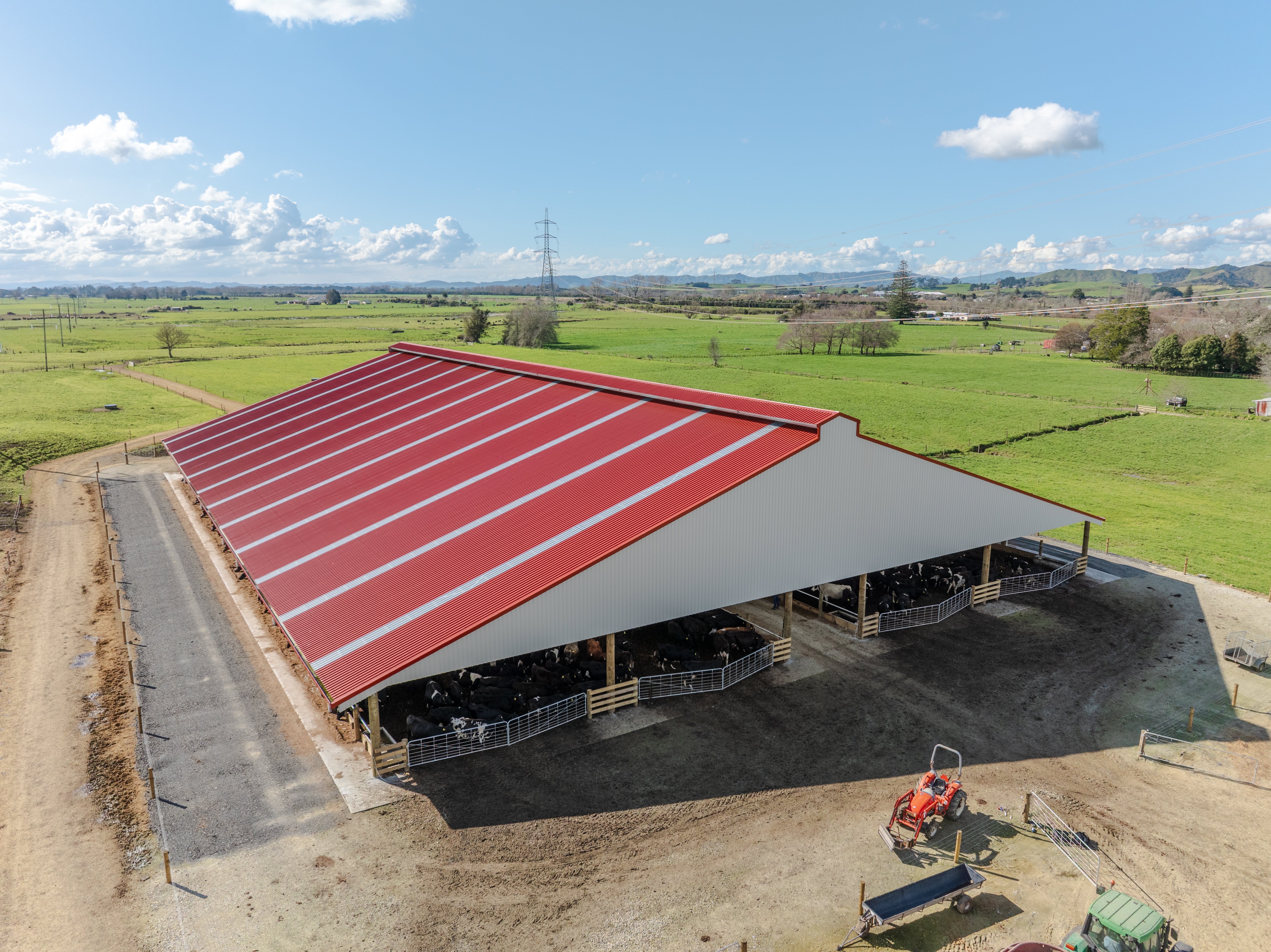
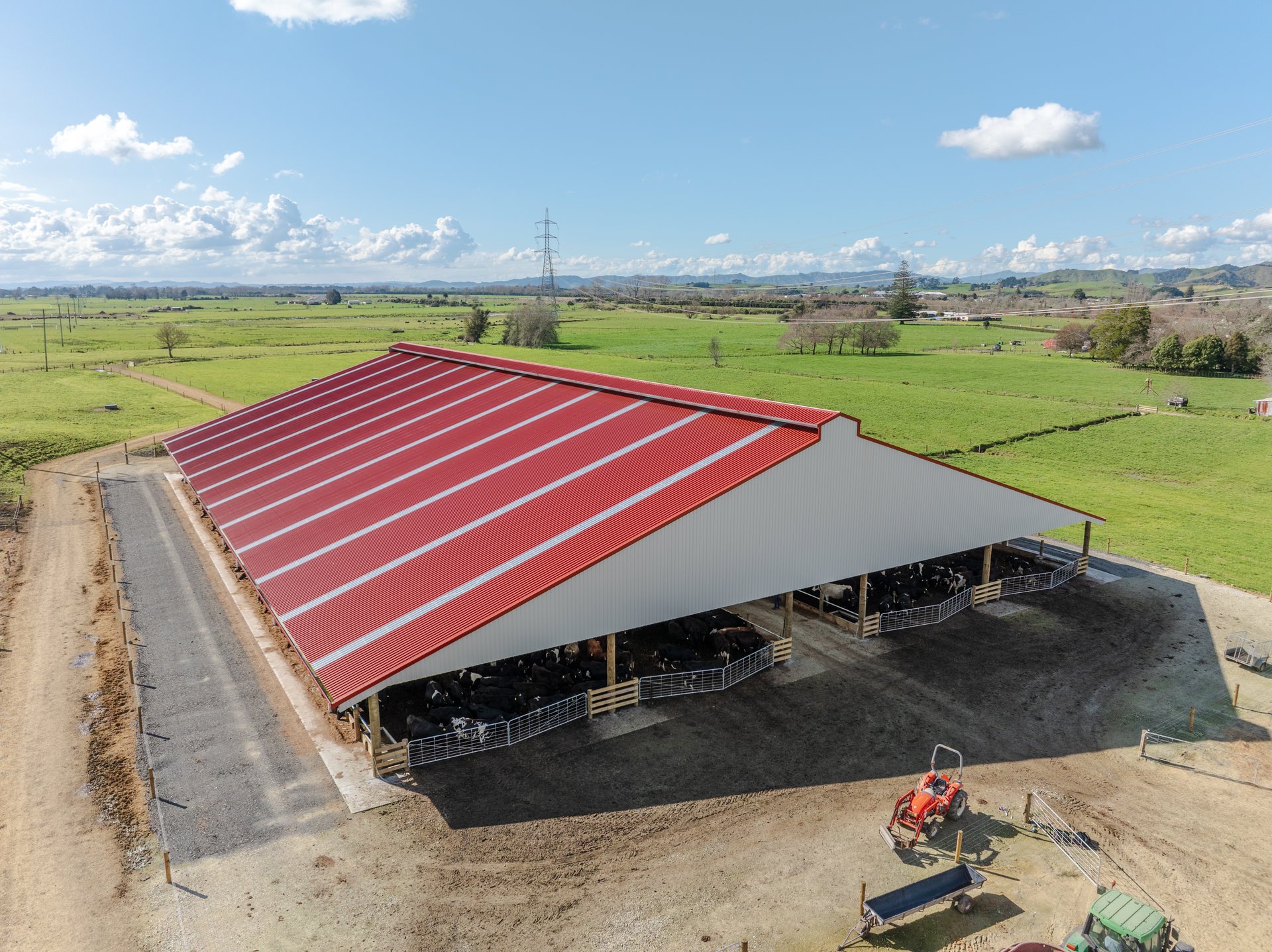
A composting barn is a covered dairy shed where cows stand and lie on a bedding material (usually sawdust or woodchip) that composts in place, giving them dry, absorbent footing and shelter from extreme weather year-round.
Aztech Buildings, which has designed dairy infrastructure for NZ farmers for more than 25 years, says uptake is rising as farmers respond to environmental compliance pressure, labour constraints and animal welfare expectations, and reports project-wide milk solids gains of 15 to 30 percent without increasing cow numbers or changing feed systems.
Aztech Buildings regional sales manager Billy Gibbs shares what's driving that demand, the results Aztech is seeing on farm, and what actually determines whether a barn performs.
TABLE OF CONTENTS:
1. What A Composting Barn Does For Your Herd
2.How Aztech Plans A Barn Around The Whole Farm
3. Cow Comfort And Milk Production
4. Milk Solids Gains And Herd Health On Aztech Farms
5. Barn Design And What It Costs To Build
6. Aztech's Wider Dairy Infrastructure Work
What a Composting Barn Does for Your Herd
A composting barn houses the herd on a deep bedding pack (typically sawdust, woodchip or a similar carbon-rich material) that's aerated regularly, either by the cows' own movement or mechanical stirring. Microbial activity in the bedding generates heat, which helps dry the pack and break down effluent in place, rather than requiring separate effluent storage and disposal.
Unlike a feedpad cover, which shelters only the feeding area, a composting barn is a full housing structure: cows can stand, lie down, and be bedded there through wet or extreme weather.
For NZ farms managing wet winters and NES-F freshwater rules, that in-barn effluent handling is often the biggest practical difference from an open feedpad.
How Aztech Plans a Barn Around the Whole Farm
Billy Gibbs says Aztech's role goes well beyond supplying a building. “We are not there for a quick sale and then gone,” he says. “We are looking at the whole farm operation, supporting the transition to a barn, and how we can help farmers control their outcomes long-term.”
Each project starts with a detailed understanding of how the farm operates: herd structure, production systems, reproduction programs, feeding programs, existing infrastructure, and staff roles and pressures.
“We are always looking at how we can improve efficiency for both cows and staff,” Billy says. “How can we utilise feed better, improve feed conversion efficiency, reduce stress, and make the whole system easier to manage? It is about helping farmers gain control.”
Cow Comfort and Milk Production
The barns provide shelter from both winter and summer weather extremes, which Billy says has a bigger impact on production than many farmers realise. “As soon as a cow experiences stress, it is noticed in the vat,” he says.
“We have done a lot of work with Dr Sue Macky who says if you can drop a cow's temperature by one degree in the summer, it equates to one litre of extra milk in the vat.”
Billy says farms using Aztech composting barns are maintaining production through summer, when milk output would typically drop, with many avoiding the switch to once-a-day milking, and some achieving extra milking days that lift the season's profitability.
Milk Solids Gains and Herd Health on Aztech Farms
“We are not changing the cows,” Billy says. “We are improving comfort and consistency, and that shows up as performance.”
For example, Tony Allcock's Waikato farm lifted production from 380kg milk solids to 590kg per cow over four years, while another farm increased from 440kg to 530kg in its first season. Because neither farm changed cow numbers or feed inputs, the gain is attributable to the barn itself, not coincidence.
The gains aren't limited to milk solids. Billy says reproduction also improves, with lower somatic cell counts and decreased vet costs.
“We are seeing cows come into calving in better condition and higher in-calf rates,” he says. Compost from the barns is also reused on-farm as a natural fertiliser, providing higher nutrient value than synthetic alternatives while supporting soil health.
Barn Design and What It Costs to Build
Barn design is critical to performance. Airflow, ventilation, roof pitch, overhangs, ridge vents and orientation all need to be carefully engineered to maintain passive airflow through the barn, which removes moisture and pathogens from the bedding and creates a better environment for cows to lie down in.
“We have spent over 15 years refining these barns with dairy specialists, consultants and agri nutritionists,” he says.
Aztech builds its composting barns on the Futura Box-Beam system, which allows a genuine clearspan structure: wide, open barns with no internal columns to disrupt cow movement or block airflow across the pack.
Composting barns start from around $1,750 per cow, constructed. Feedpad covers, a lower-cost, partial-shelter alternative, start from around $650 per cow, constructed. Actual cost depends on herd size, site conditions, bedding system, and design specification.
Aztech's Wider Dairy Infrastructure Work
Aztech's work also spans other dairy infrastructure: feed storage, animal shelters, industrial buildings, and hangars, supported by a nationwide builder network. Billy says the focus remains firmly on helping dairy farmers build more resilient, sustainable farming systems.
“We have created an online nationwide community for farmers to share ideas, learn from each other and support each other,” he says. “That is one of the great things about the dairy industry. Everyone can work together to improve.”
Planning a composting barn? Aztech designs barns around your farm system, not a standard template, backed by 25+ years of dairy infrastructure experience and results across NZ farms.
Frequently Asked Questions
What is a composting barn?
A composting barn is a covered dairy shed where cows stand and lie on bedding (typically sawdust or woodchip) that composts in place, providing shelter, absorbing effluent, and producing a reusable fertiliser by-product.
How much does a composting barn cost per cow in NZ?
Composting barns typically start from around $1,750 per cow, constructed. Final cost depends on herd size, site, and specification.
Do composting barns actually increase milk production?
Aztech Buildings' project data shows composting barns lifting milk solids by 15–30%, attributed to improved cow comfort rather than any change in cow numbers or feed.
What's the difference between a composting barn and a feedpad cover?
A feedpad cover shelters only the feeding area, while a composting barn is a full housing structure where cows can stand, lie down and be bedded for more complete weather protection. Feedpad covers are the lower-cost entry point, from $650 per cow.
How does barn design affect cow comfort?
Airflow, ventilation, roof pitch, overhangs, ridge vents and orientation determine how well a barn keeps bedding dry and removes moisture and pathogens; poor design undermines the comfort and health benefits it's meant to provide.
Does composting barn bedding have any other use?
Yes. Compost produced in the barn can be reused on-farm as a natural fertiliser, offering higher nutrient value than synthetic alternatives while supporting soil health.