Audmore Dairy: A Composting Barn Built for Auckland's Toughest Winters
Location: Makarau, Auckland, NZ
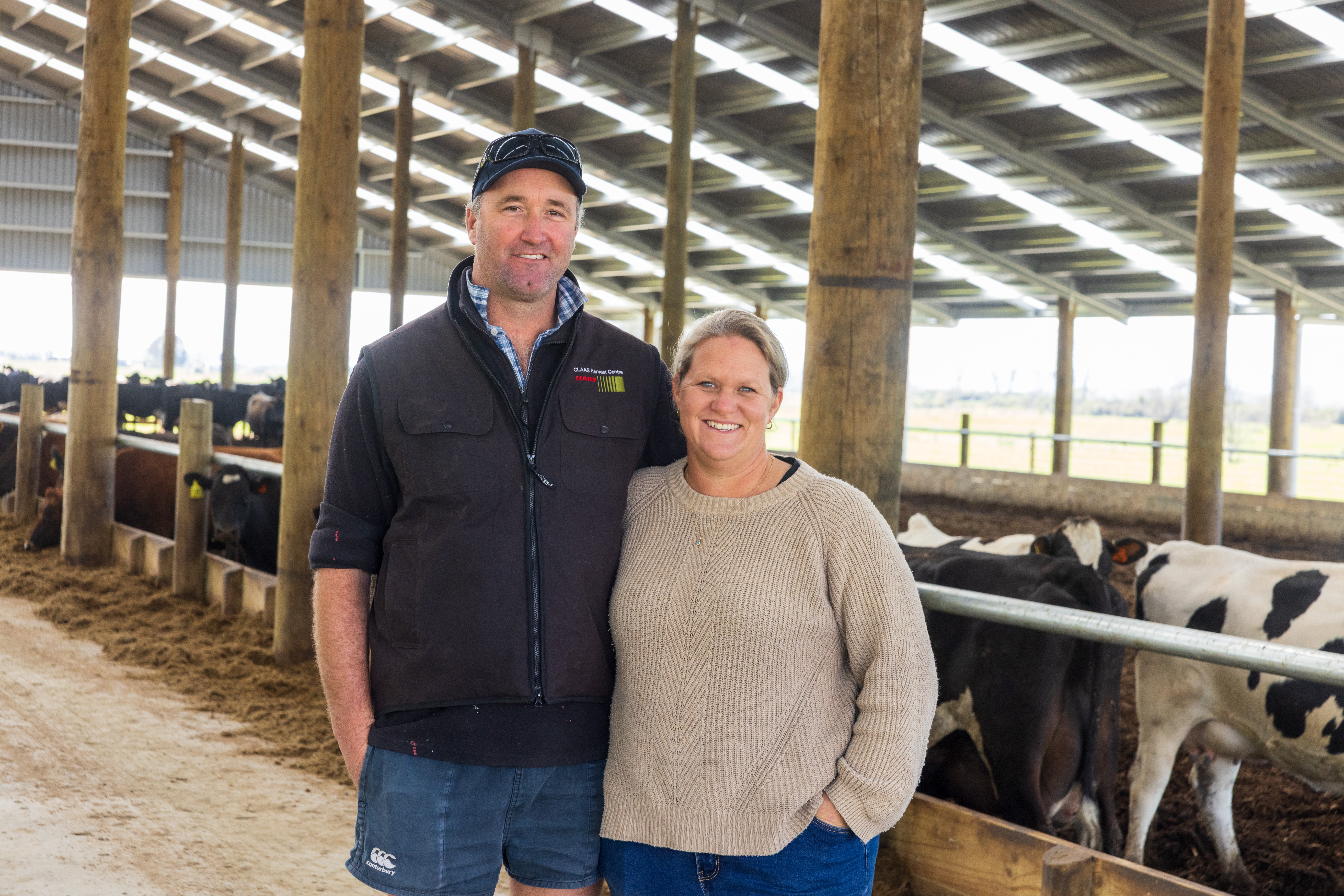
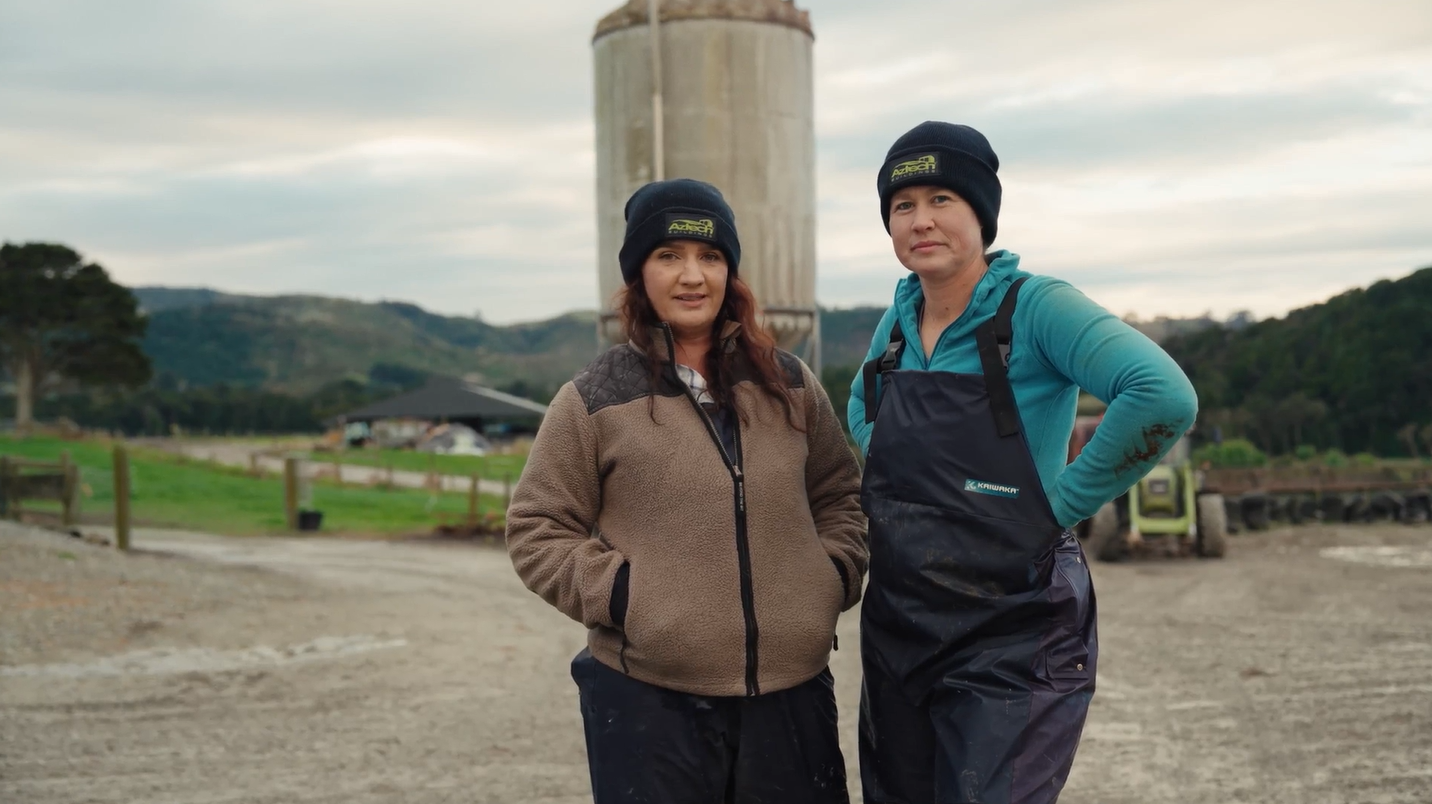
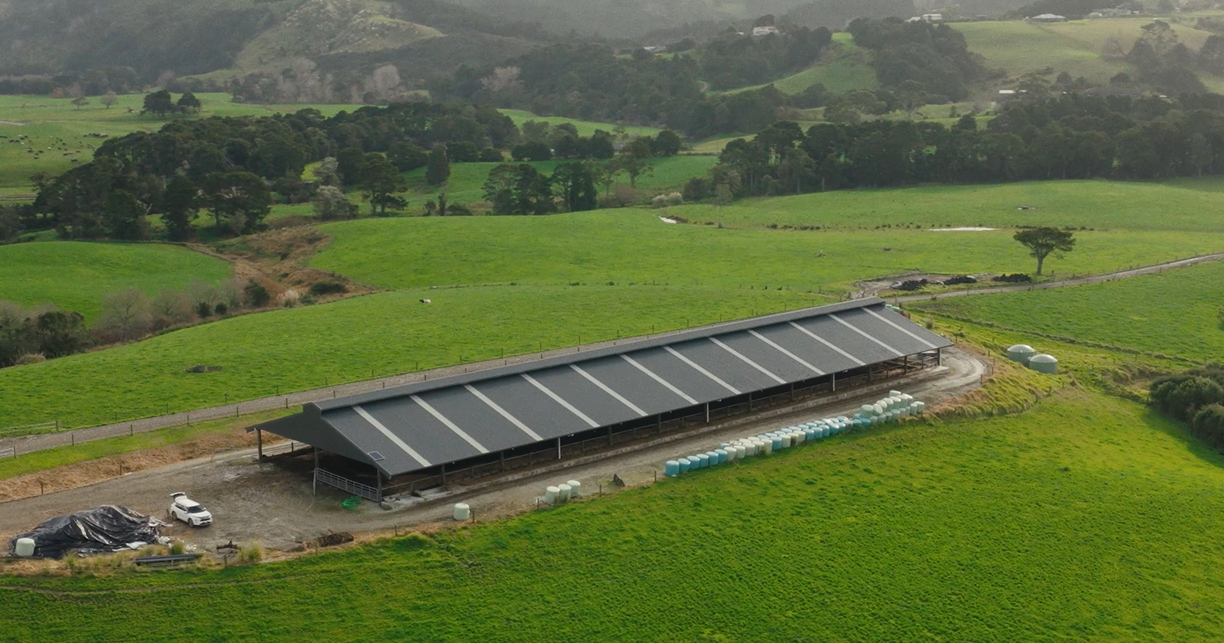
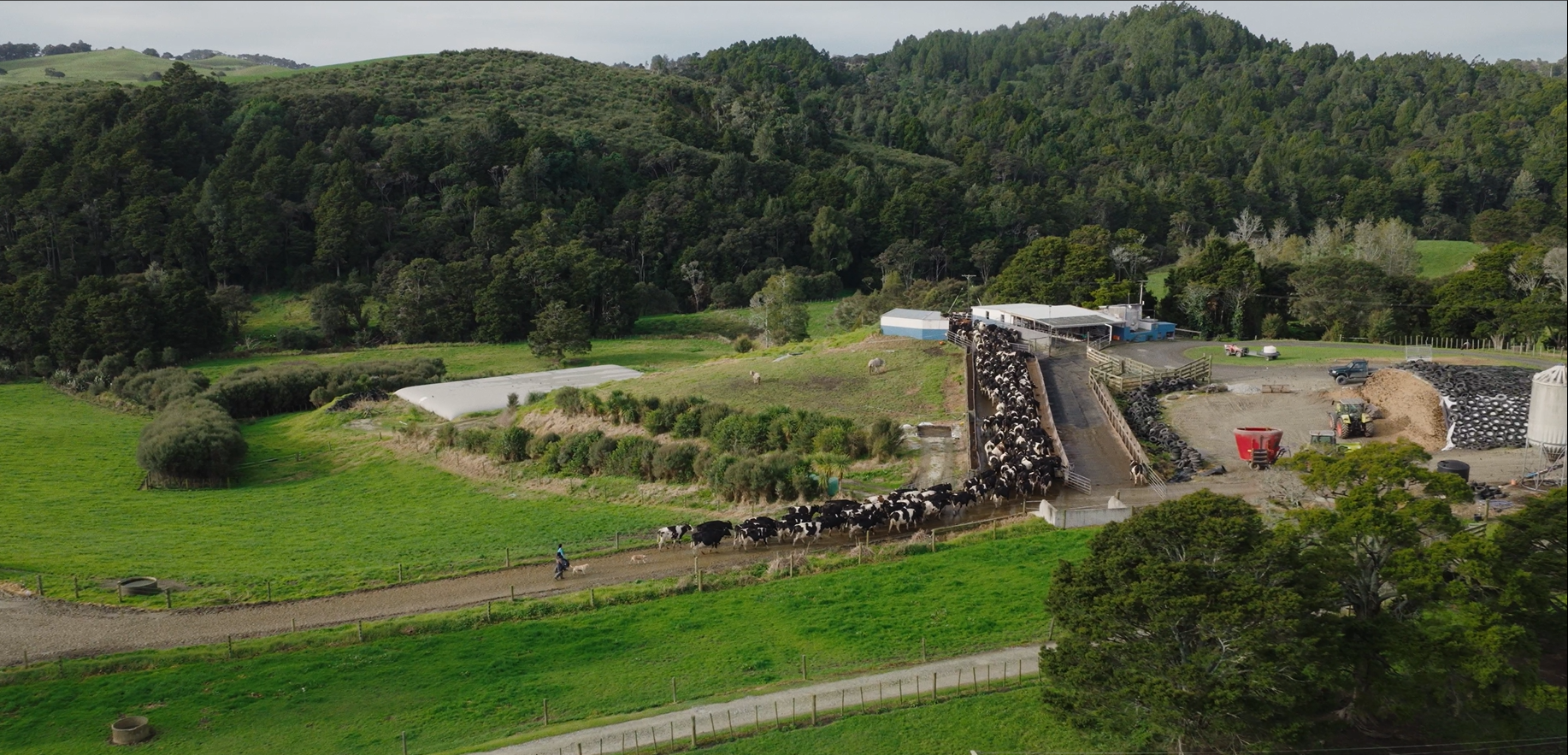
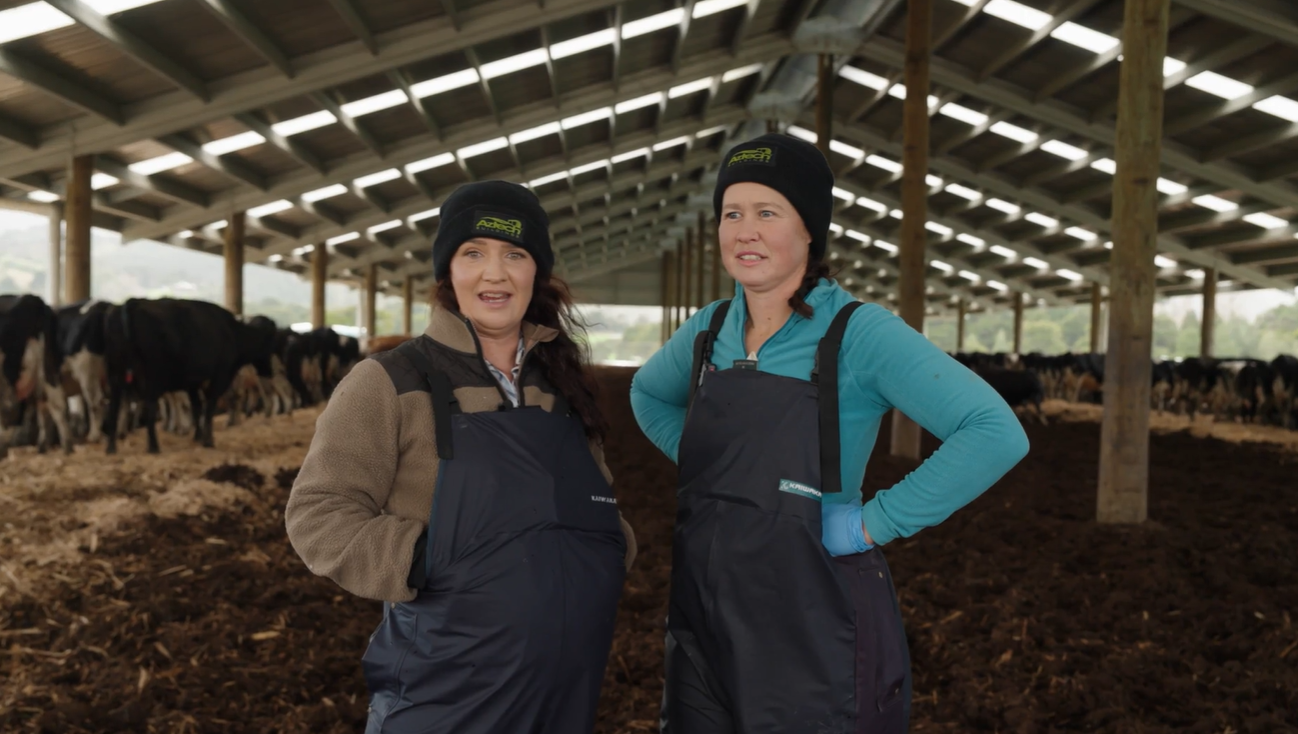
Audmore Dairy is a small, family-run operation in Makarau, west of Warkworth and about an hour north of Auckland, milking 200 mainly Friesian cows. James Brady runs the farm, having moved to New Zealand from the UK; Nic and Tig, who work the farm day to day as part of the wider family and farm team, share the load across every part of the operation.
Audmore Dairy at a Glance
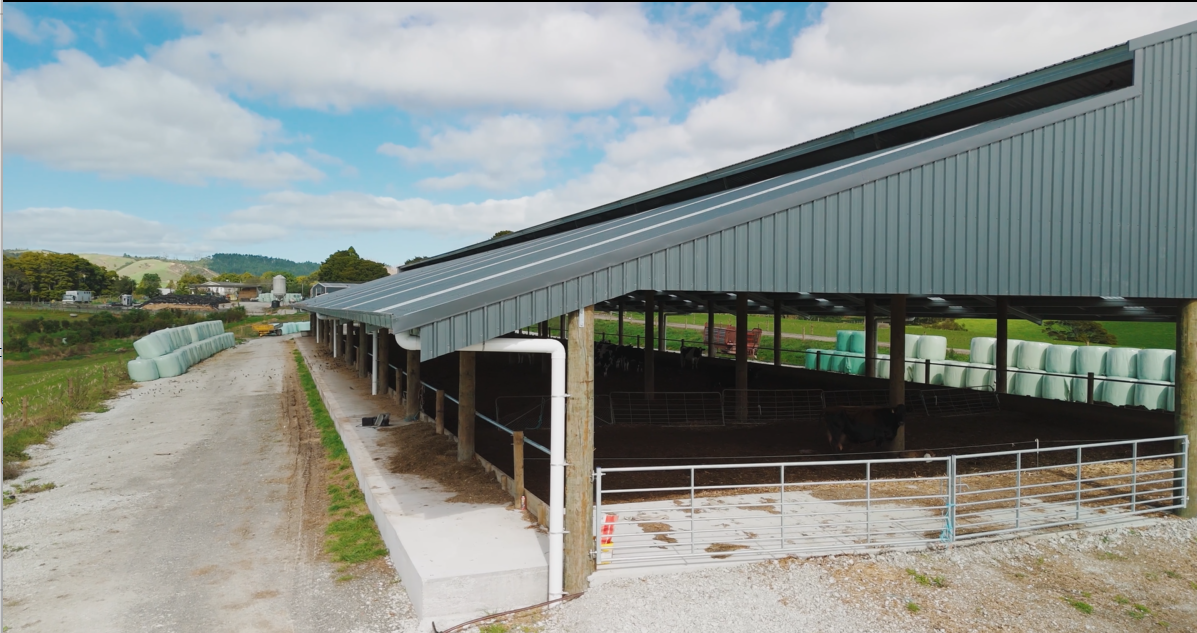
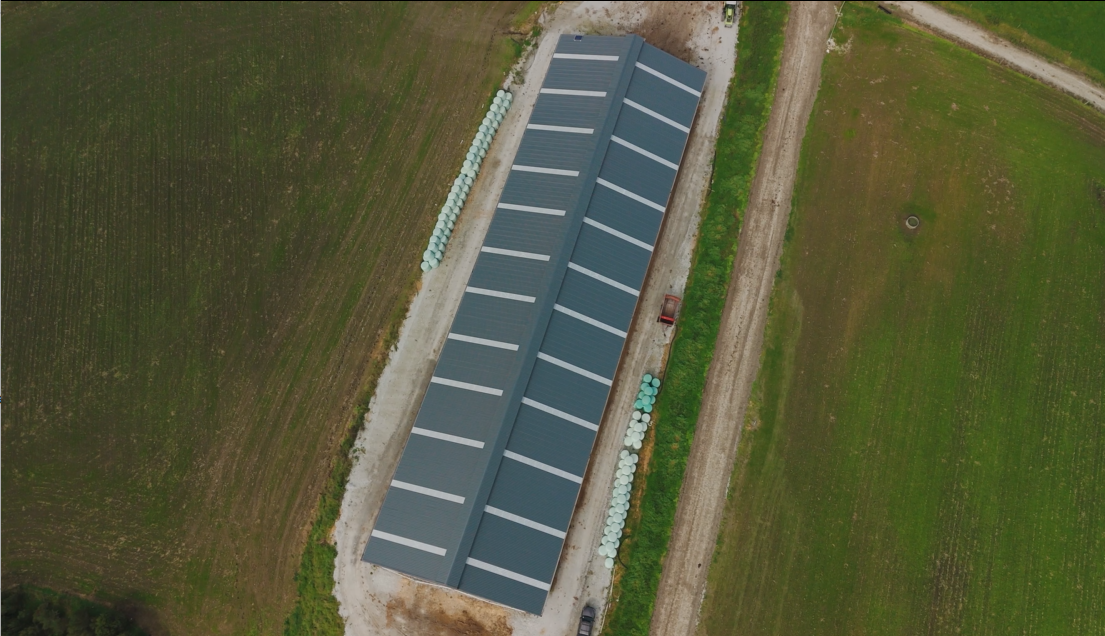
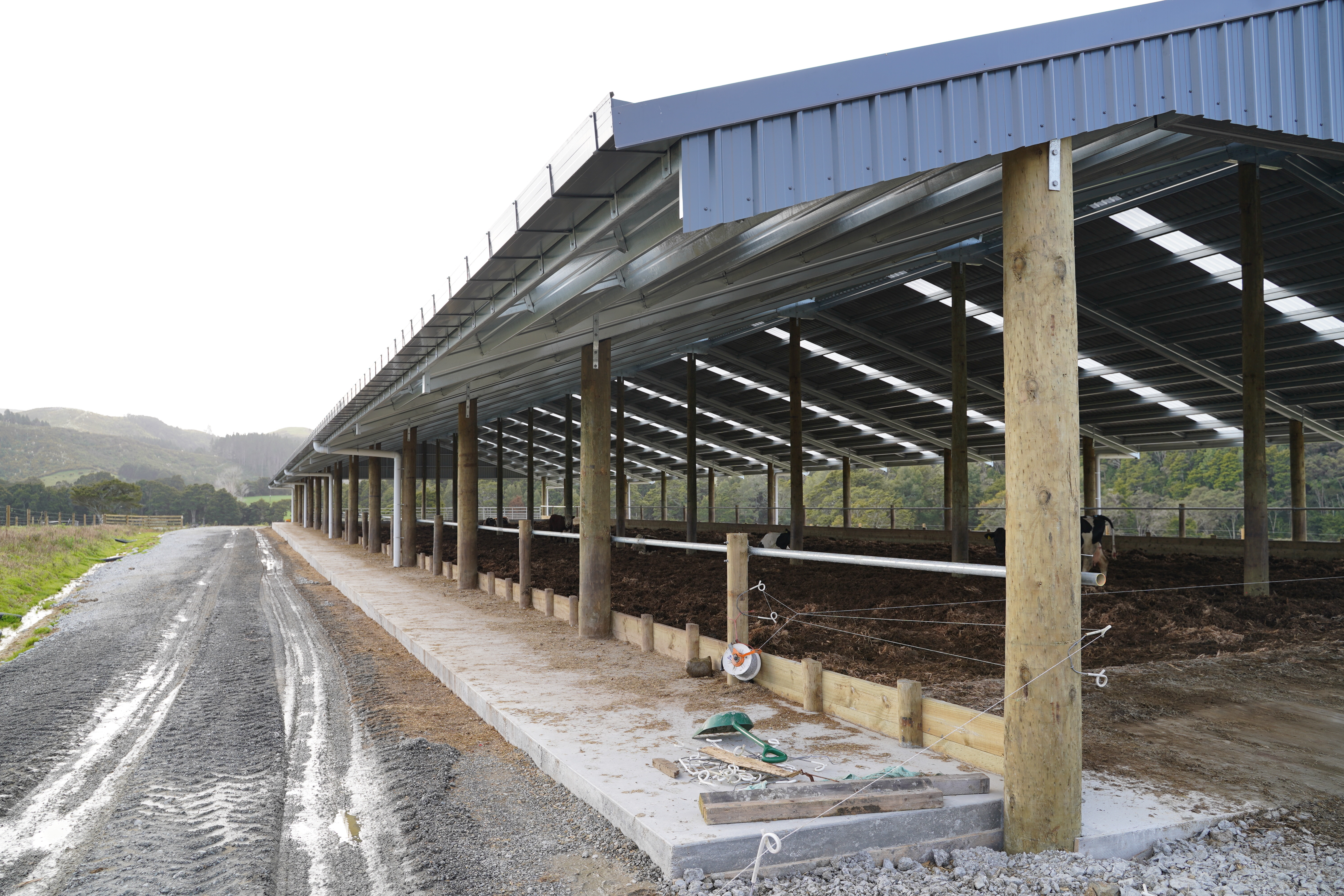
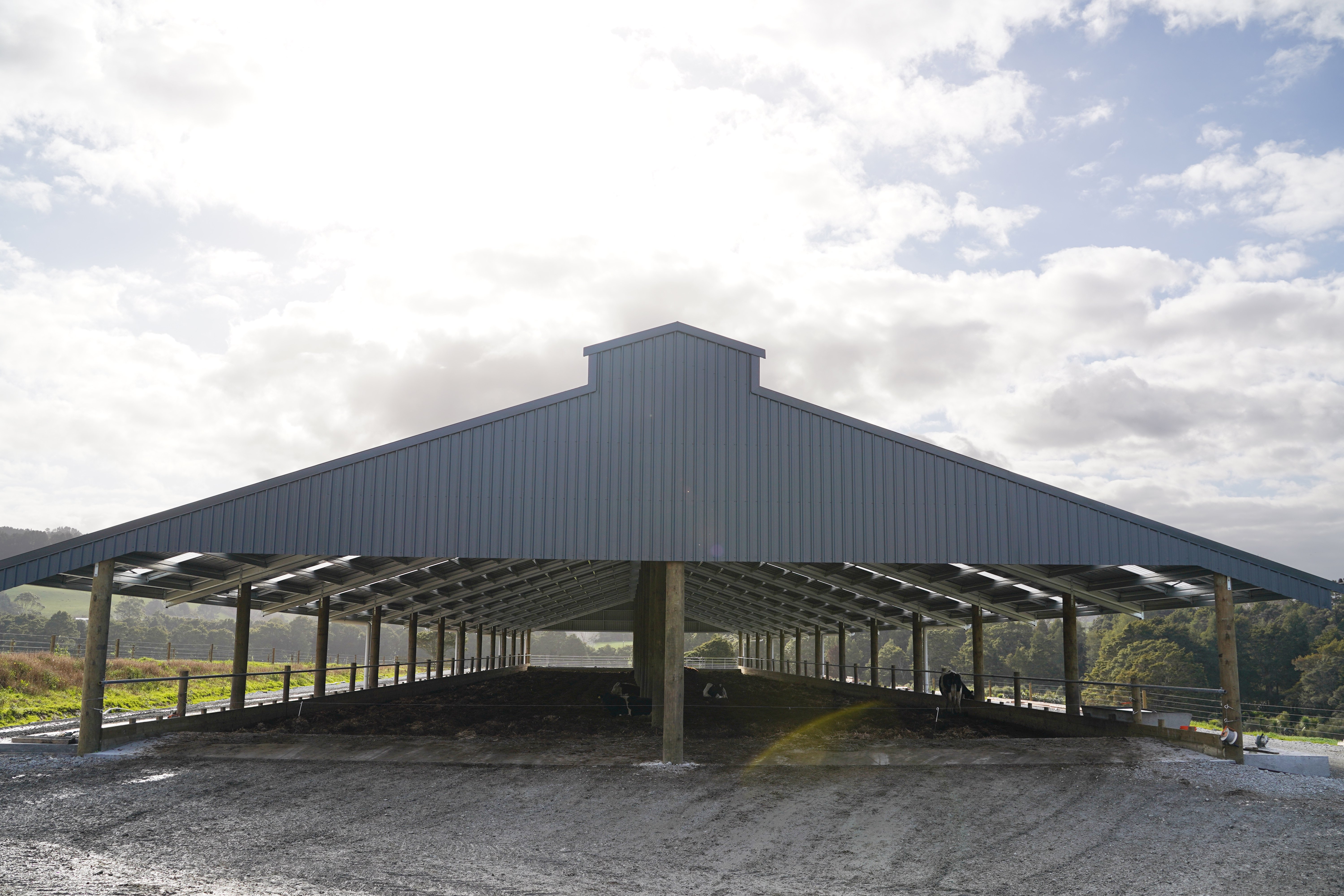
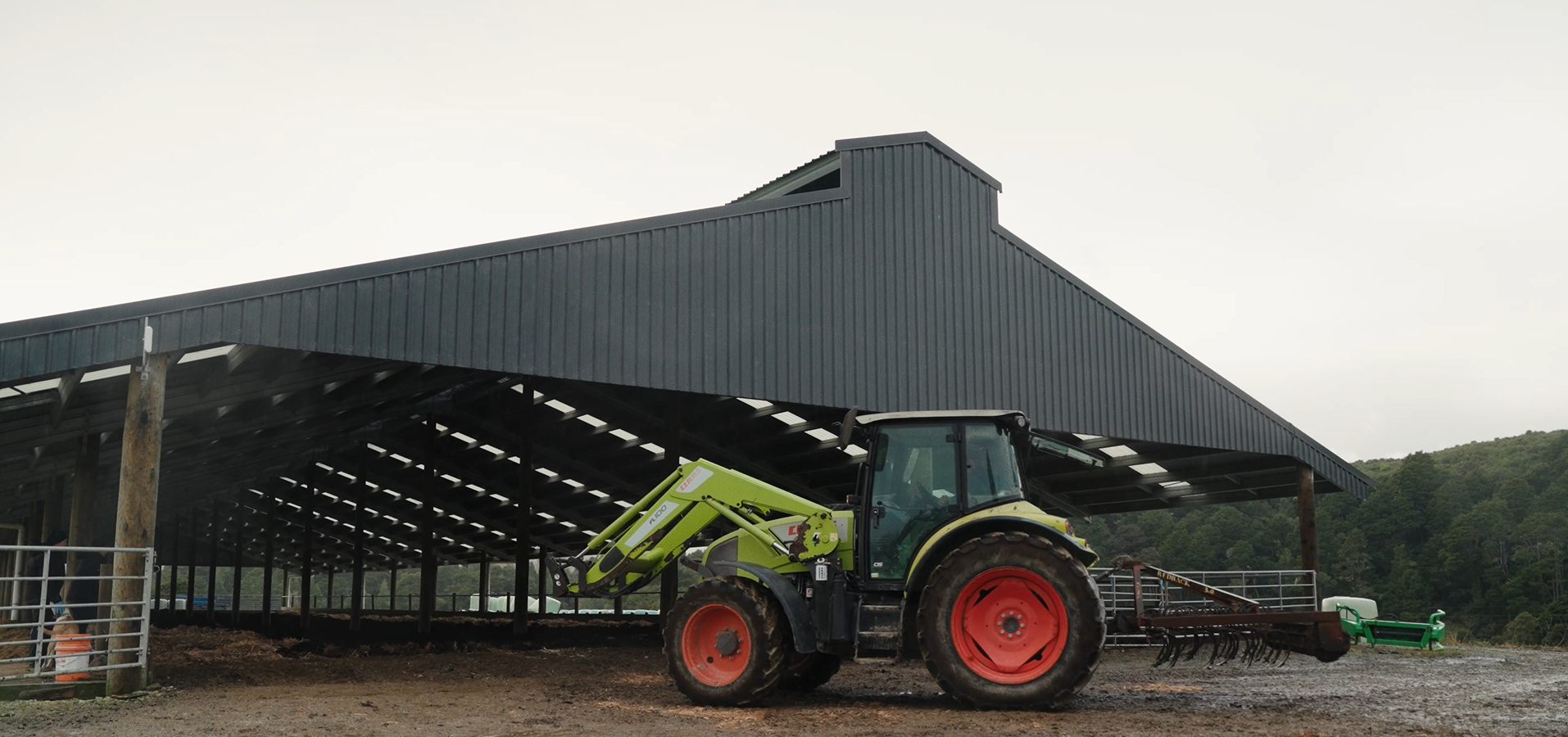
- Size: 87m L x 7.8m H
- Style: Gable
- System: STRATOS
- Herd: 200 mainly Friesian cows
- Milk solids: Up from around 420 to a best-ever 540 kgMS per cow
- Bulk cell count: Down from 130 to 77, now trending around 30
Storms, Floods, and a Winter That Broke the Old System
A run of extreme weather set this project in motion. Cyclone Gabrielle and the Auckland floods hit hard, and the wet winter that followed made the farm's existing system feel unworkable.
“We had a really bad summer a couple of years ago, so we had the cyclone Gabrielle and the Auckland floodings, and then that was backed on to a real bad winter,” James recalls. “It just felt as though it was getting unsustainable to carry on, try and winter outside with a full autumn calve and milk through the winter, and that was just getting harder and harder.”
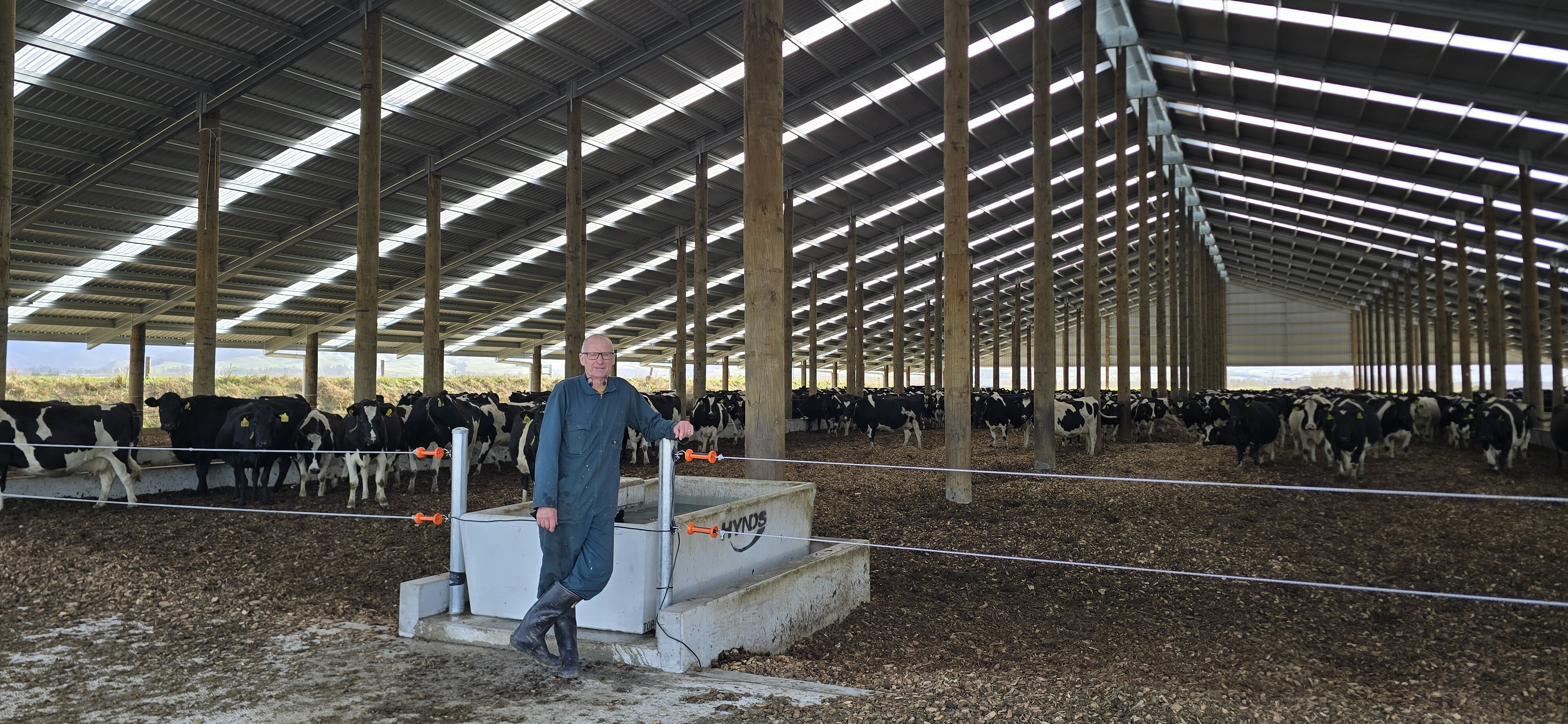
The priority became clear: get the cows off wet paddocks and extend the rotation, particularly through winter. Having lived in the UK, James was already familiar with the idea of off-paddock housing. Researching shed options, the composting barn concept stood out.
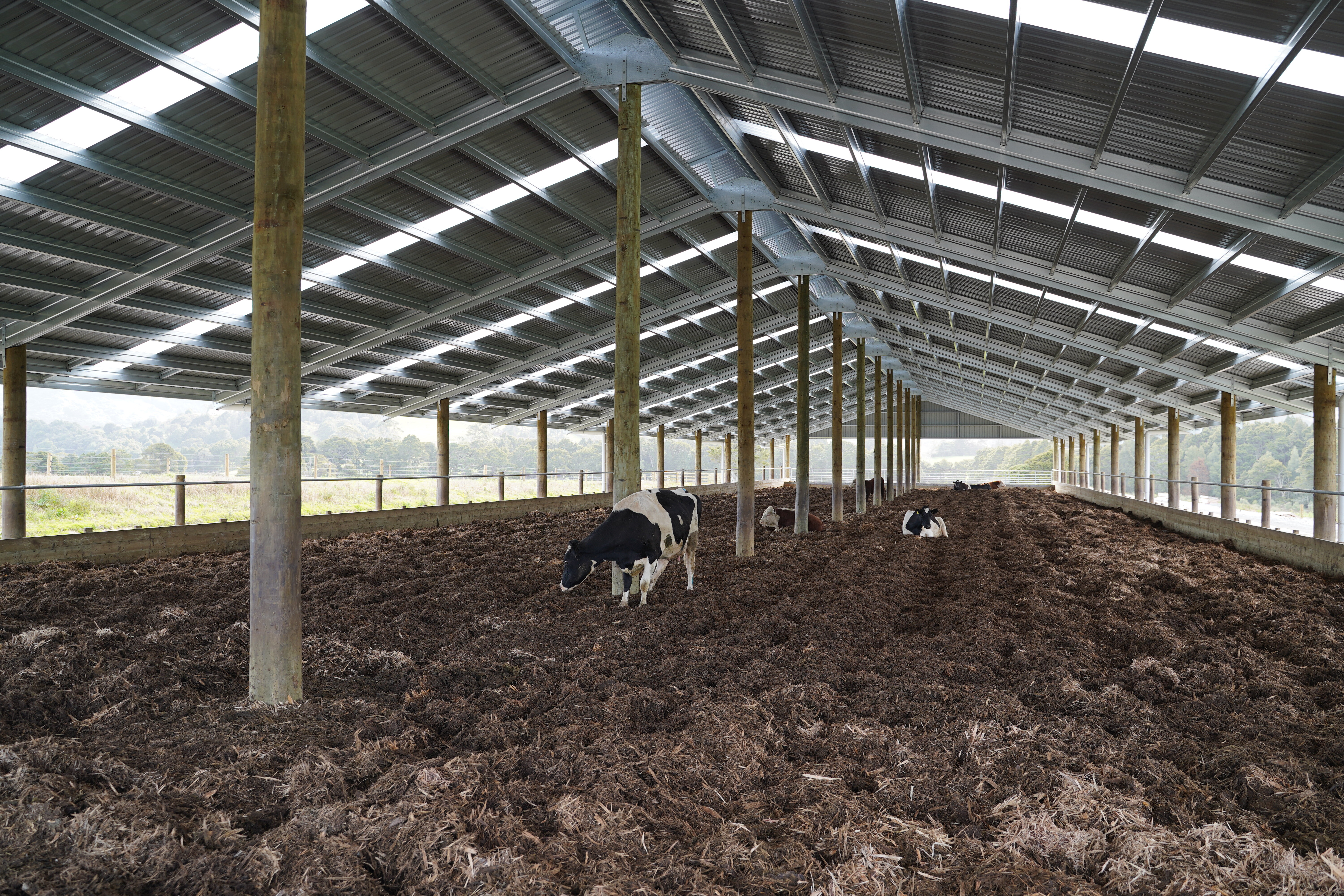
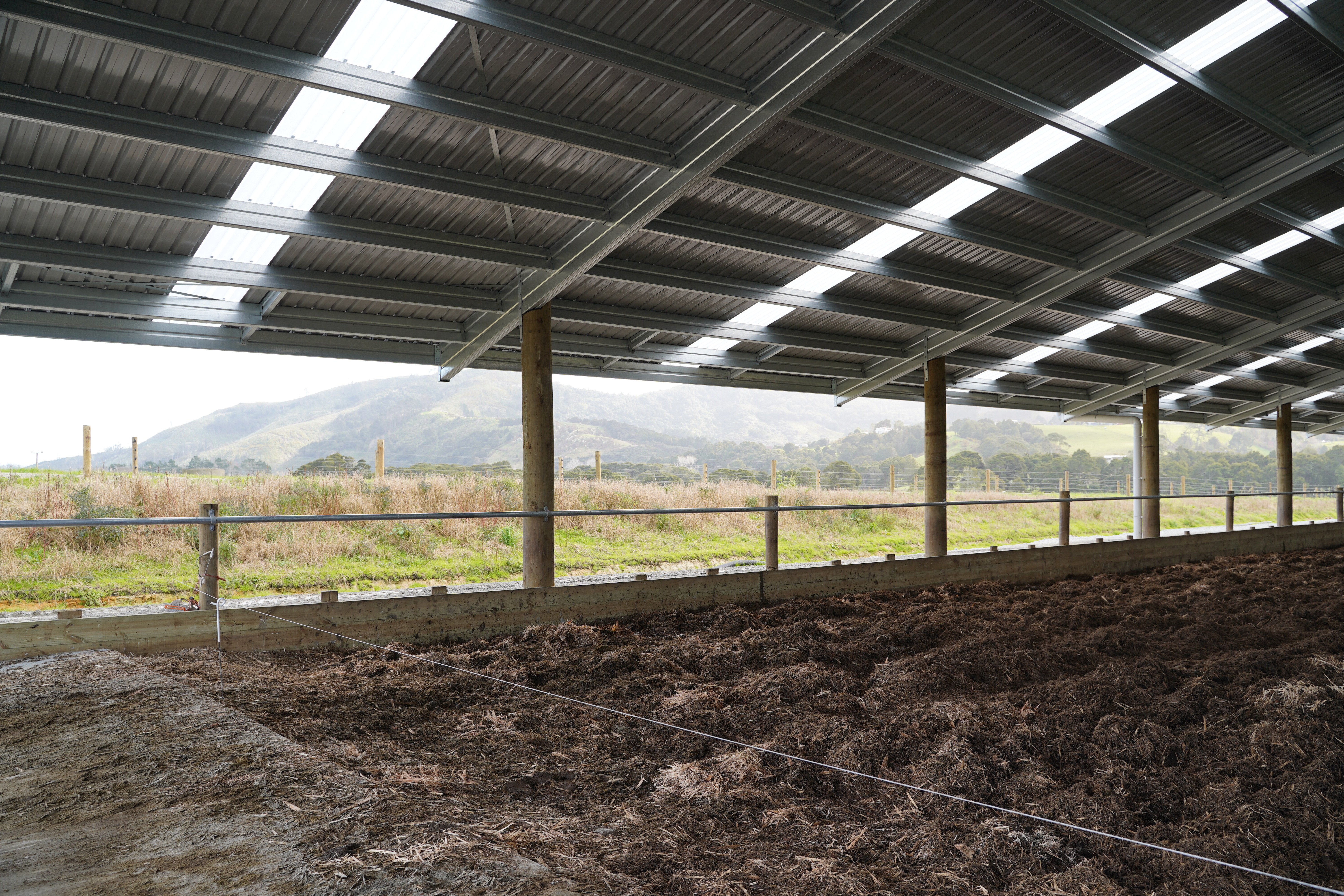
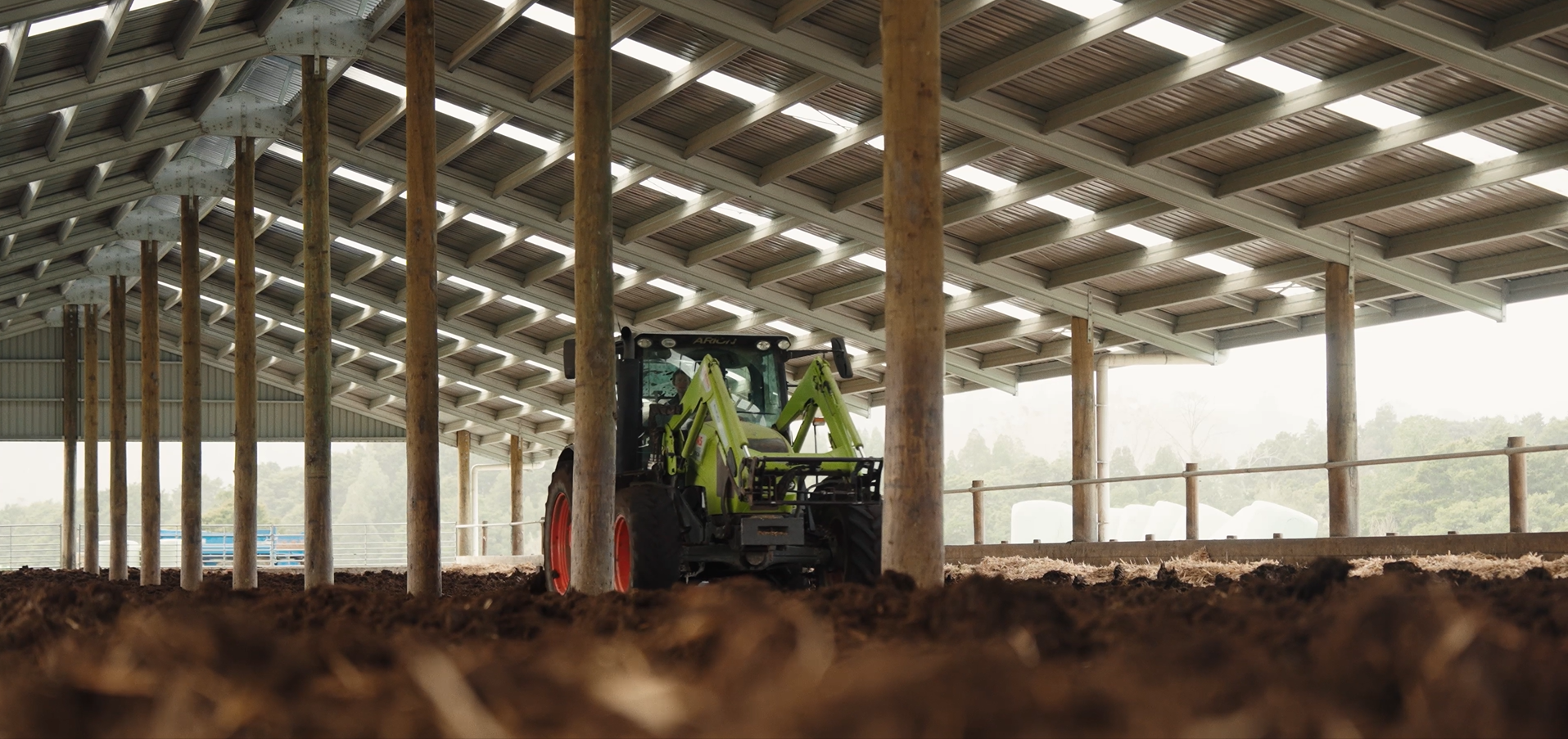
“I quite like the concept, having the composting part: nice dry bedding, a lot less effluent to have to deal with in terms of scraping up, sort of a freestall type barn,” he says.
A Proven Design That Handles the Wind
Wind exposure on the property made the final call on builder.
“We picked Aztech because they've got a tried and tested design, so I could see it was working on other farms as well. We get a real lot of wind here, and that was sort of the deciding factor to go down the Aztech route, just with a real solid building,” James explains.
The build process matched the pitch. “We actually had a really good run working with Aztech. A salesman came out and talked through the process with us, which was really good, clear, simple and straightforward,” he says.
Council requirements added complexity along the way, but Aztech adjusted the design to meet the rules while keeping engineers satisfied, and costs were laid out clearly from the start: “What they said is what we got, so you can't ask for much better than that.”
How the Barn Works Day to Day
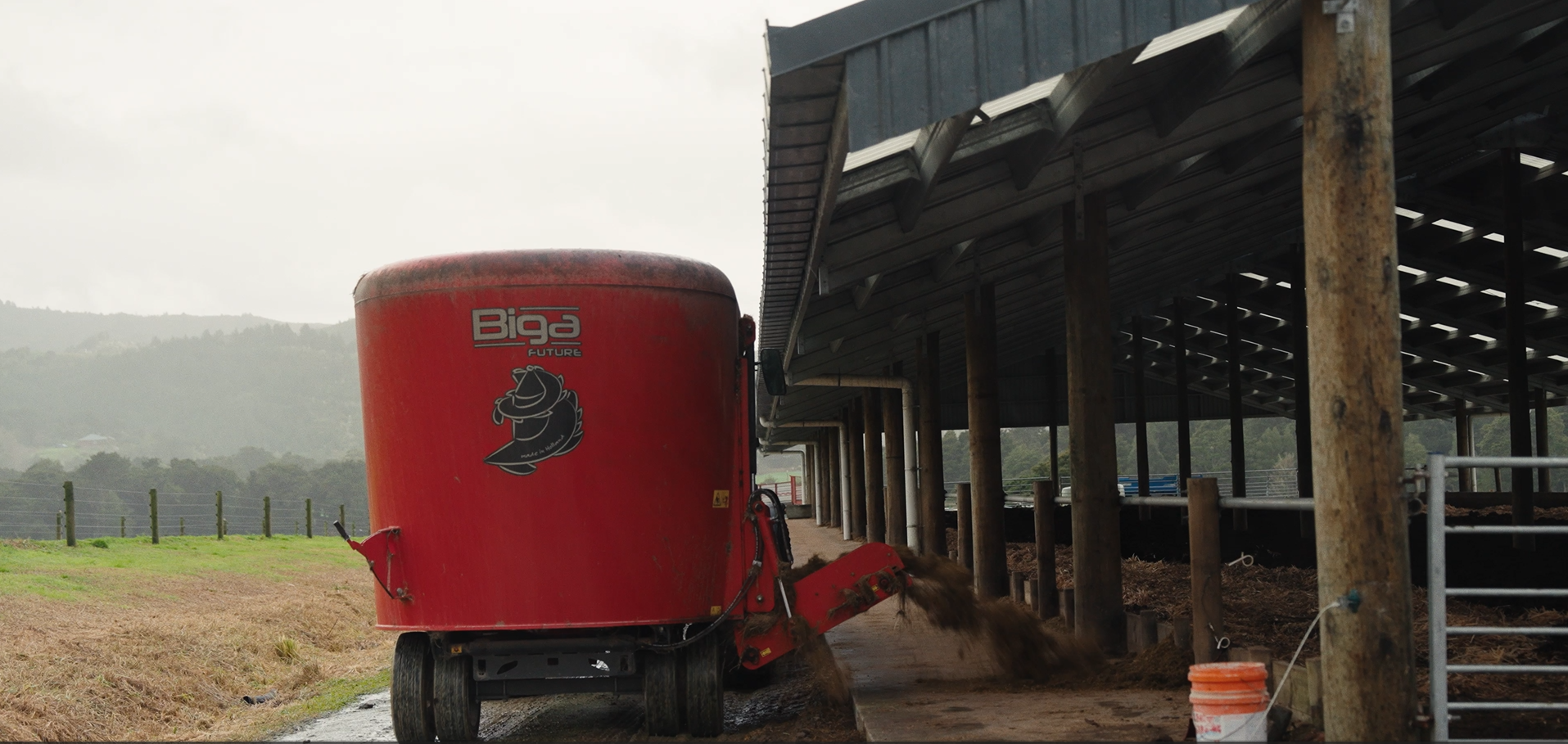
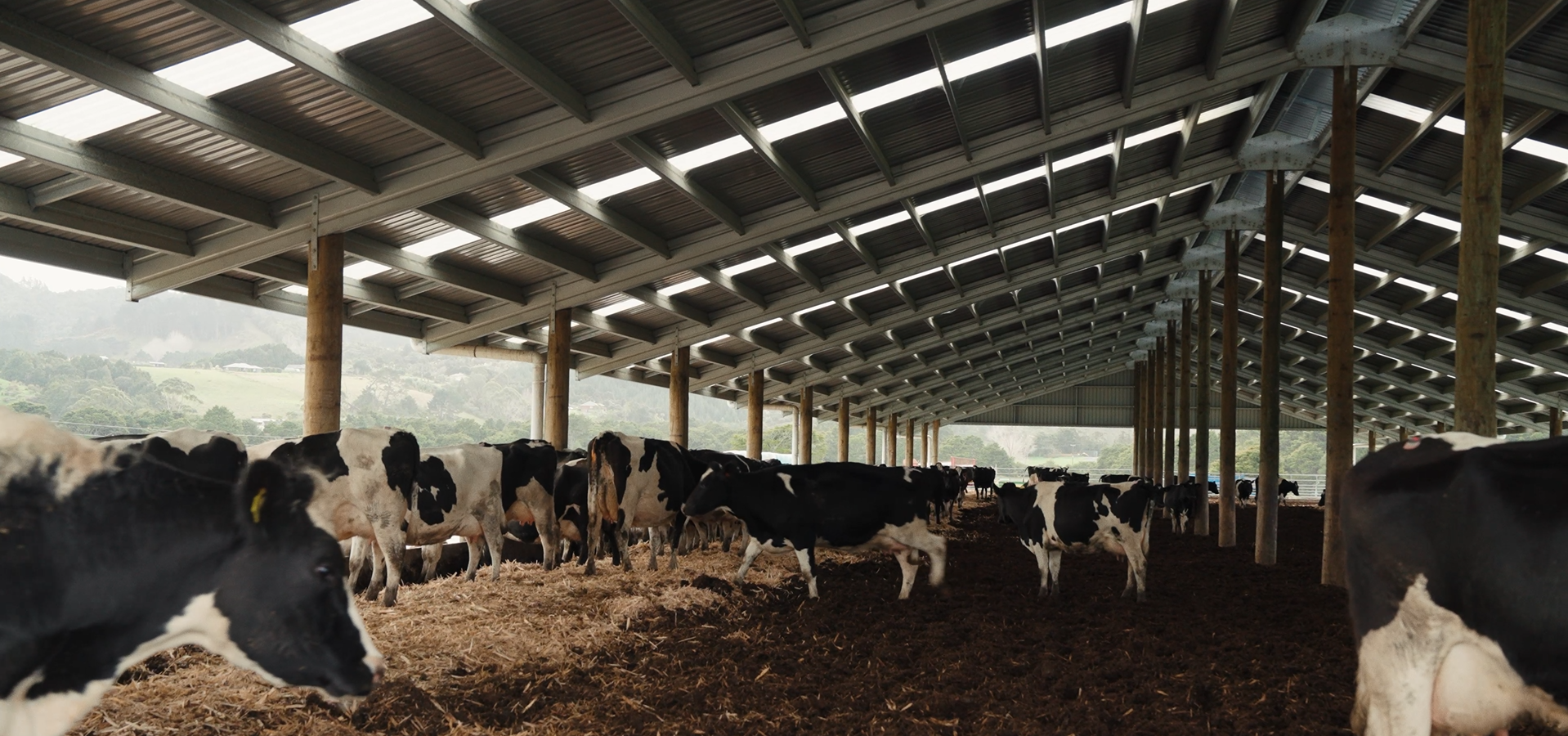
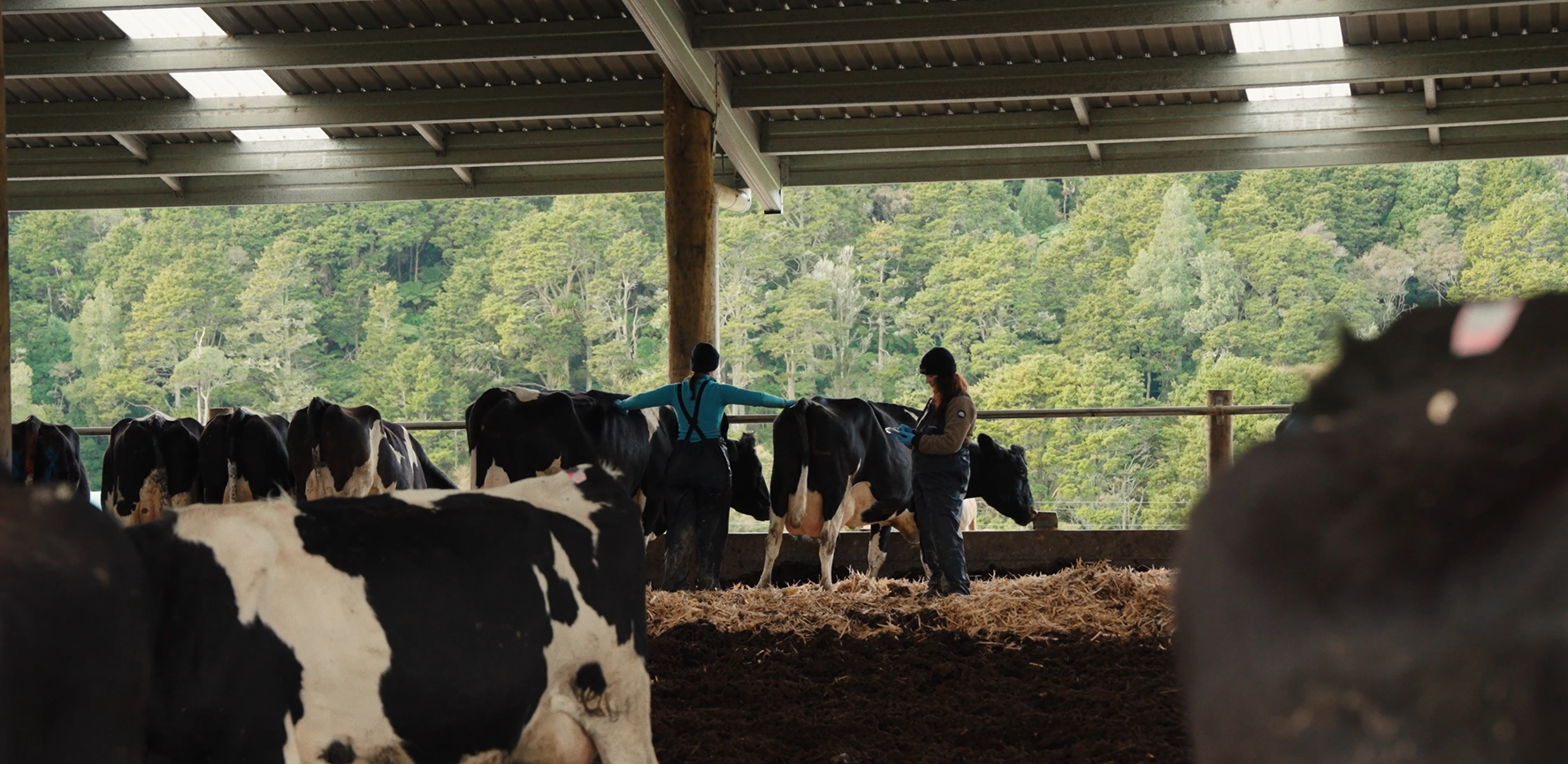
Cows are housed overnight and let out to paddock each morning, coming in earlier on extreme weather days. They're fed in the barn before milking and return afterwards, with the barn able to accommodate the herd for up to 36 hours at a stretch when conditions demand it.
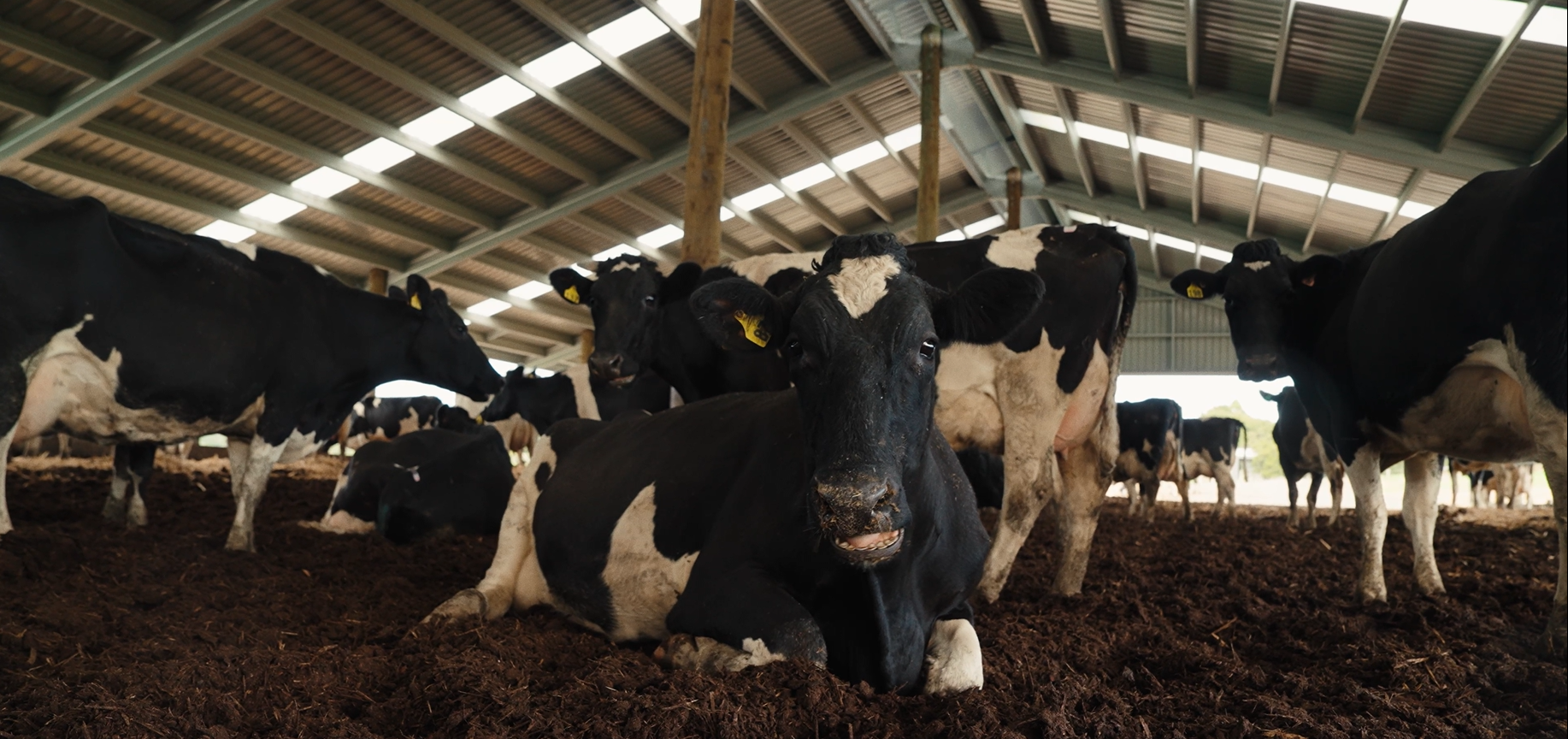
“The cows do a lot better just in and out of the weather, even for a little while,” James explains.
“We're able to maintain the round a lot better, utilise the grass we've got, and graze the paddocks when the conditions are more suitable. We're growing a lot more grass and doing a lot less damage because of it.”
Watch: James on Choosing and Building the Barn
A Day in the Life with Nic and Tig
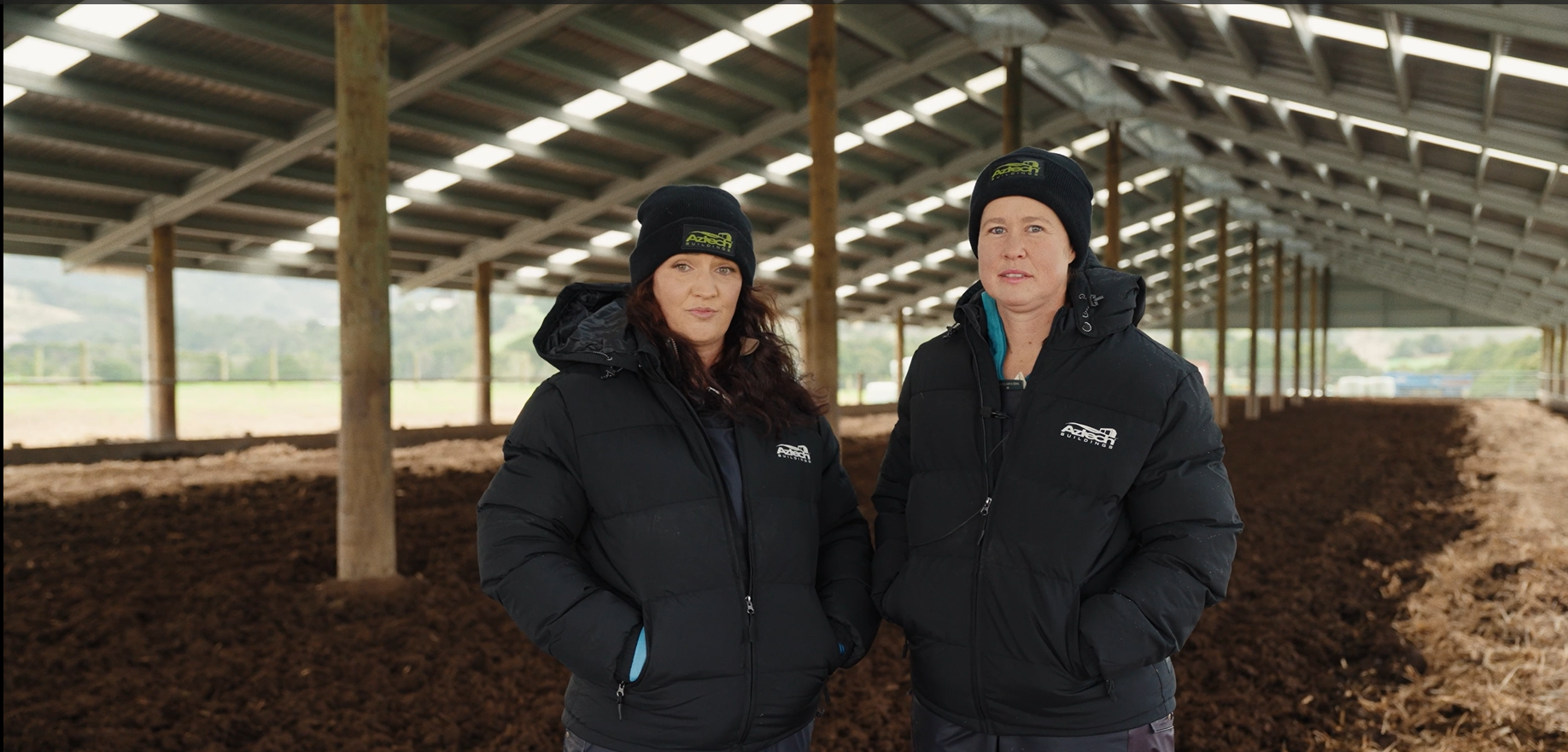
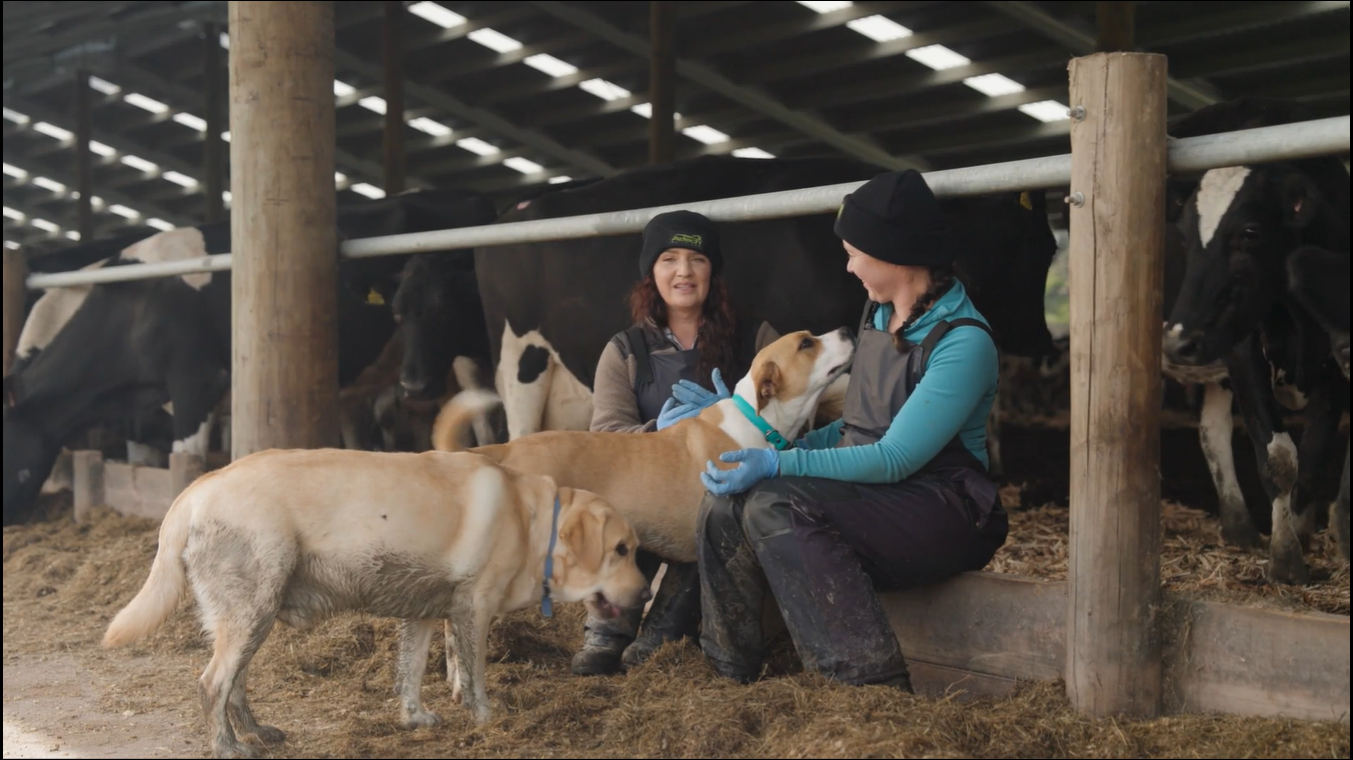
Nic and Tig, sisters-in-law who work the farm day to day, keep the barn running. On the ground, their daily rhythm centres on the bedding.
“Every single day, we rip the shed,” Nic and Tig explain. “We start with a deep rip, which just turns it right over, and then we bring in the finer rip, which makes it nicer for the cows to lie on. It helps with the breakdown of bacteria as well.”
By afternoon, the herd is heading in for its evening feed before milking, and the barn's position makes that an easy walk.
“The barn's quite central to all the paddocks,” they say, “so generally they don't have to walk too far.” Milking itself moves quickly: about five minutes a cow in the afternoon, closer to seven in the morning.
Cell Counts Down, Production Up
Since the barn went in, production has held steady through weather that would once have caused a drop, paddock quality has been preserved through winter, lame cows can recover safely with less walking, and the herd is visibly more settled.
The numbers back it up.
“Our average bulk cell count for the last year was 77, which is pretty amazing,” Nic and Tig say, “and currently it's trending around 30, so we're pretty stoked with it.”
Production has climbed just as clearly. “Before we got the Aztech barn, when, again, we had the worst winter ever, our production was around 420 milk solids a cow,” they explain. “And then this season, we've had our best production ever, at about 540 milk solids a cow. There are a lot of factors, obviously it's not just the barn, but it is a big part of it.”
Confidence, On the Farm and Off It
For the family, the change isn't only visible in the production figures. As Tig explains:
“Composting barn has been game changing for us. It's changed our entire farming system in a positive way. We've got no regrets at all. Just the stress levels have dropped hugely.”
It's also a story about women in agriculture: backing yourself, and showing the next generation that women are every bit as capable of building successful careers in farming.
“You can do anything, you've got to believe in yourself,” they say.
“There are probably a lot of people out there that don't agree that we're just as capable as any other male farmer, but we can do everything that a man can do. You know, we've got children, I've got three girls myself, and I want to show the girls that women can do anything.”
Watch: A Day in the Life at Audmore
Want the full picture on how a composting barn performs? Get the Composting Barn Guide for real farm results and design tips.
Frequently Asked Questions
How much can a composting barn improve milk solids production?
At Audmore Dairy, milk solids rose from around 420 to a best-ever 540 per cow after installing an Aztech composting barn. Production depends on multiple factors, but the farm names the barn as a major contributor.
Does a composting barn help lower somatic cell count?
Yes. At Audmore Dairy, average bulk cell count fell from 130 during a difficult 2023–24 winter to 77 the following year, and is now trending around 30.
How does a composting barn help farms cope with extreme weather?
By housing cows overnight and during extreme weather, farmers protect paddock quality, extend the grazing rotation, and graze only when conditions actually suit, rather than being forced onto wet ground.
How long does it take to milk a cow with a barn-based system like this?
About five minutes per cow in the afternoon and seven minutes in the morning, on this 200-cow operation.
Location: Makarau, Auckland
Client: Dairy Farmer
Application: Animal Housing, Dairy Farming, Composting Barn, WinteringBarn
Reference: C3172



.svg)
.svg)

.jpg)